WRC Braking Technology
The Importance of Brakes in Rally
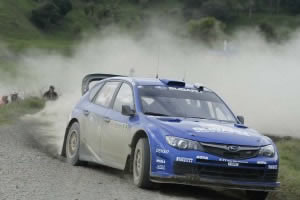
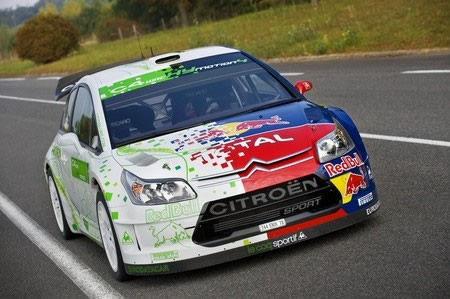
Brakes are among the most critical components on a WRC racing car, whether on tarmac or gravel events. Slowing the car down plays just as important a role in boosting overall speed as the engine itself. Beyond simply reducing speed, rally drivers use the brakes to position and balance the car on approach to corners and to slide through tight hairpins while maintaining engine speed.
Each car’s brake setup differs between gravel and asphalt rallies, owing to the different demands and usage in each condition.
Asphalt Brake Setup
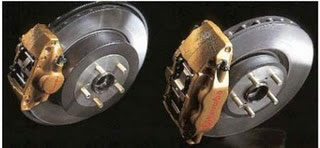
For an asphalt rally, WRC cars typically use 366 x 24 mm six-groove brake discs mounted to aerospace-grade aluminium mounting bells at the front, and 305 mm discs at the rear.
These are paired with eight-pot calipers with titanium pistons at the front and four-pot variants at the rear. On asphalt there is generally more available grip than on gravel, so more force can be exerted through the brakes without the wheels locking. This generates more friction. Speeds are also generally higher, leading to greater loads.
Heat Management on Asphalt
With abundant grip available, the driver pushes the brakes hard, producing a large amount of energy to dissipate. Significant heat is generated, and the stages can be long. It is critical that temperatures stabilise quickly rather than continuing to climb. If the temperature keeps increasing, the brakes will eventually fade and lose performance. Running on tarmac means the energy levels absorbed by WRC brakes are considerably greater than those experienced on other surfaces.
Extreme Operating Temperatures
Disc temperatures often reach extreme levels of up to 900 degrees Celsius (road car discs would not survive much above 600 degrees Celsius, at which point cast iron begins to glow red). Tarmac pads for high-performance WRC use are specially manufactured to offer possibly the highest temperature capability available. Their unique formulation delivers exceptional bite and braking power even at temperatures at which gravel rally pads would either fade or deposit heavily on the discs, causing a loss of performance and consistency. Discs are often water-cooled to improve efficiency.
|
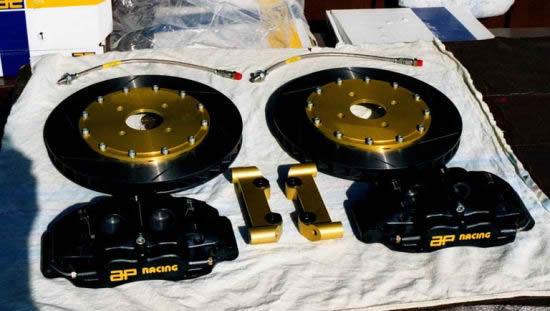
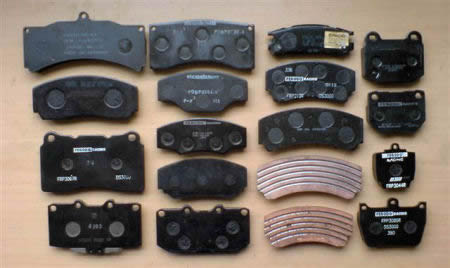
| Collection of WRC braking disc pads used by all WRC teams and considered as best racing products: Alcon-Prodrive, Ferodo, Mintex, Carbon Metallic, Endless, Pagid, Carbonne Lorraine, Pro Friction, AP Racing |
Caliper Specifications
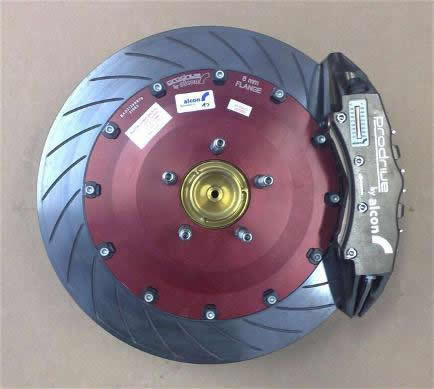
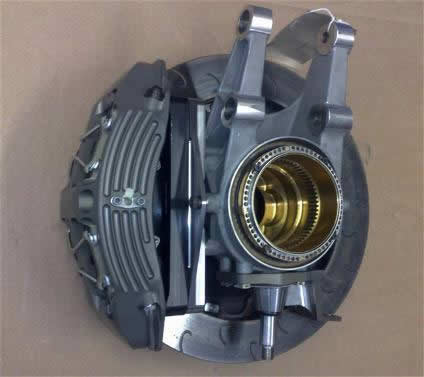
| Alcon Prodrive 6 pot water cooled caliper with 366 x 32 disc used in WRC, on the picture outer side of the grooved disc |
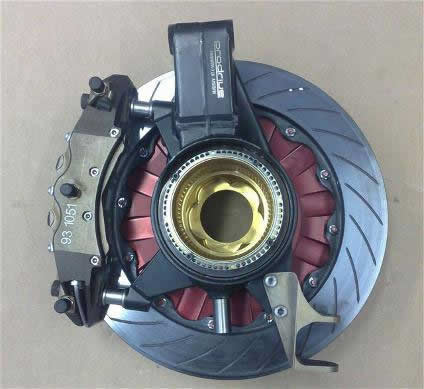
| Same as up, Alcon Prodrive 6 pot water cooled caliper with 366 x 32 disc used in WRC, on the picture inner side of the grooved disc. You can see suspension attachment points |
| Alcon Prodrive 8 pot water cooled caliper with 366 x 40 disc used in WRC, on the picture inner side of the grooved disc. You can see suspension attachment points. |
Why Bigger Brakes Matter
The larger discs and calipers enable more braking force to be exerted, slowing the car more rapidly. The increased surface area is also more efficient at dissipating the resulting heat. While the discs and brake pads are designed to work at high temperatures, there is an optimum level, and overheating leads to reduced performance. Water jets can be used to cool the front brakes, which can reach 900 degrees Celsius. Brake fluid temperature can also reach 120 degrees Celsius.
There are two main reasons why larger brakes are the key to more stopping power:
Bigger brakes (discs) have more surface area and can therefore dissipate more heat. Heat is the worst enemy of brakes. It can glaze the pad surface by melting it, making it smooth and reducing friction. It can make the calipers so hot that the brake fluid boils, creating air bubbles that are compressible and allowing the brake pedal to go to the floor with minimal effect. High temperatures can also warp or even crack brake discs unless they are carbon discs like those used in F1.
Bigger brakes have greater leverage on the tire, so less braking force from the brake pad produces more stopping power at the tire.
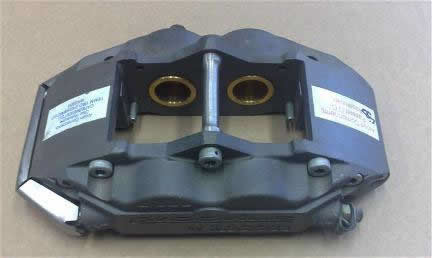
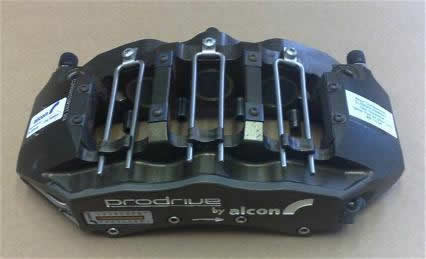
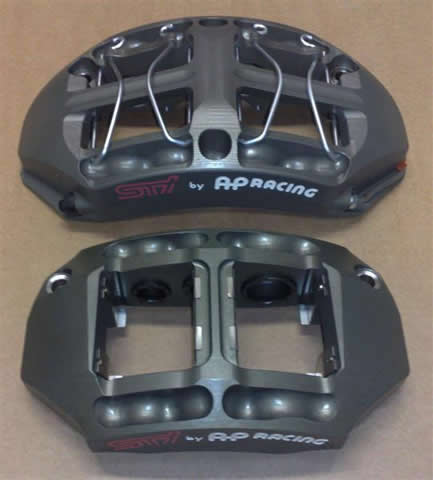
| WRC Brake 4 pot calipers Prodrive Alcon S4 - S10 |
| WRC Brake 6 pot calipers Prodrive Alcon S6 - S10 |
| WRC Brake 6 pot calipers AP-Racing S11-on |
Gravel Brake Setup
By contrast, the brake setup for a gravel car is typically smaller, owing to the reduced braking forces available on loose surfaces and the fact that smaller wheels used on gravel would not physically fit over the asphalt brake discs. On gravel, the front discs are 305 mm racing items, coupled with four-pot calipers both front and rear. The rear brakes remain the same for both surfaces.
Brake Bias
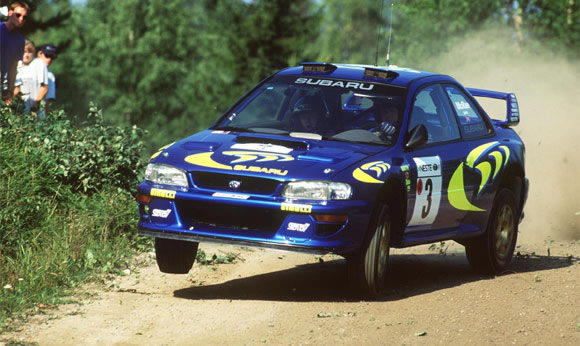
On asphalt, the front brakes do the vast majority of the work in slowing the car, so brake bias tends to be set toward the front. On gravel, the bias is shifted more toward the rear to help slide the car into the corners.
Hydraulic Handbrake
|
Hydraulic handbrake system in two flavors. on the picture above you can see handbrake version mostly used in WRC (Prodrive WRC GD Impreza carbon handbrake). Other version showed on the lover picture is handbrake stick and sequential shifter in Mini WRC car for 2013.. |
|
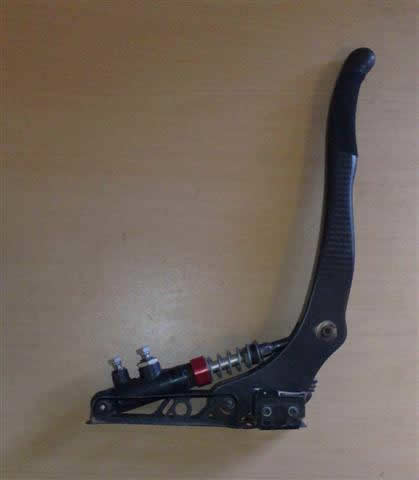
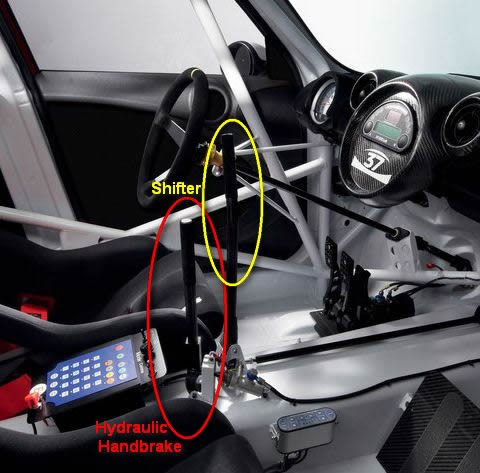
To help slide the rear on asphalt or gravel, the handbrake system is hydraulic and highly efficient. The lever is positioned where a road car’s gear stick would normally be, allowing drivers to reach it easily without moving their hand far from the steering wheel. As with the rear brake setup, the handbrake is the same for both gravel and asphalt rallies.