Wheelbase
Definition
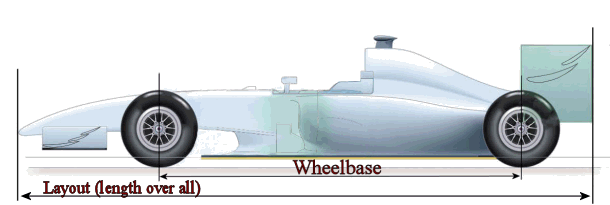
The wheelbase is the distance between the centreline of the front wheels and the centreline of the rear wheels. Adjusting this value can influence road performance to a considerable degree. For example, the wheelbase can be altered by changing the construction of the suspension arms or by inserting a spacer between the engine and the gearbox.
Effects on Handling
A longer wheelbase is better suited to straights and long, fast corners, and it can improve the car’s aerodynamics. However, a longer wheelbase car is not as agile in tight cornering.
A shorter wheelbase car has improved drivability and allows faster cornering, but it may suffer from minor aerodynamic compromises. Designers must find the right balance, as always.
Wheelbase and Car Layout
The car’s overall length is determined by the sum of its major components – monocoque, fuel tank, engine, and gearbox – and their relationship to each other. The net total of these lengths dictates, to some extent, the car’s wheelbase. Although it influences drivability, wheelbase is not a critical design factor in isolation. Shorter cars do not intrinsically possess better cornering abilities. Instead, wheelbase length is largely driven by the aerodynamicist’s desire for the optimal shape to package the sidepods and turning vanes. Layout is critical in other respects: fuel tank length, gearbox length, and engine position all affect the shape and packaging of the car as well as the weight distribution.