Transponders and Cameras
Onboard Camera Systems
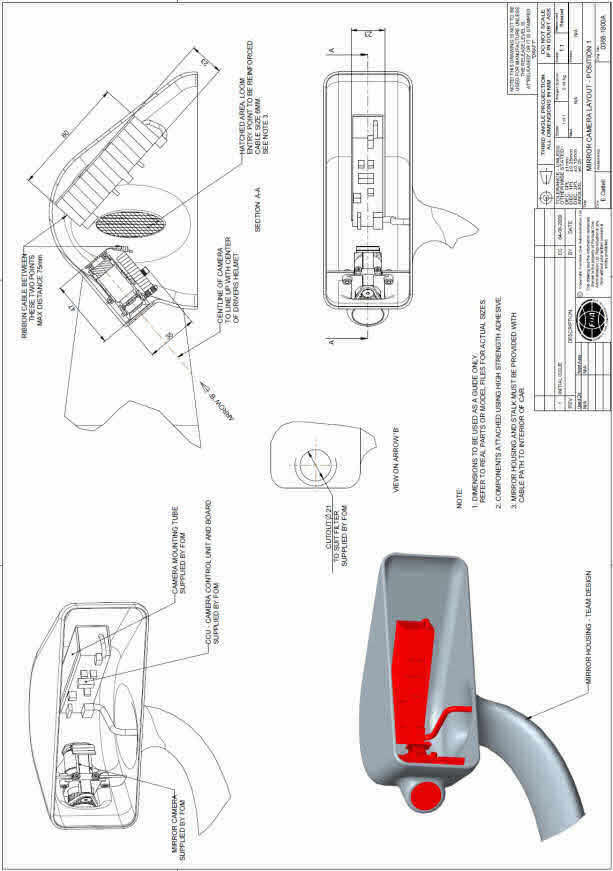
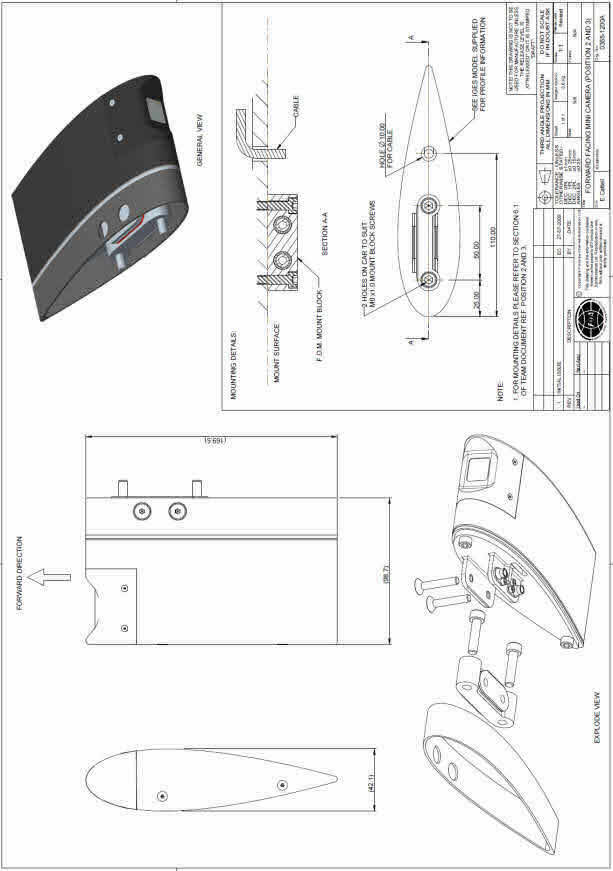
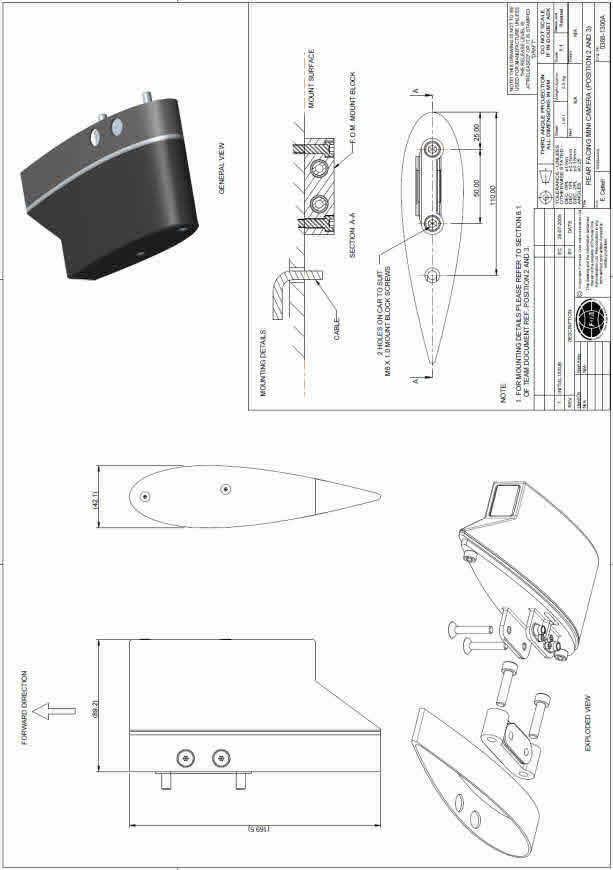
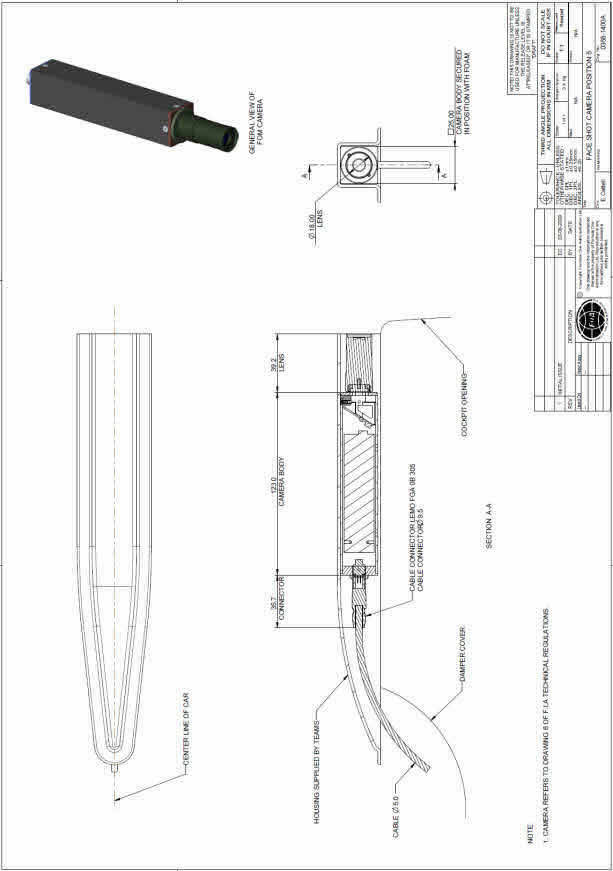
Throughout the Grand Prix weekend, all cars must be fitted with two FOM cameras or camera housings. The cameras are used to provide onboard television footage.
The cars have a total of six camera mounting points. One camera housing is always mounted on top of the airbox immediately behind the driver’s head. The position of the second housing is chosen by the FIA in consultation with the relevant team and driver.
The timing system and equipment manufacturer, AMB, produces a special transponder unique to Formula 1 that can receive information from the timing loop antenna. This data is primarily used to send commands to the onboard camera, such as scrolling the protective film when blemishes appear. It also has the capability to receive information regarding the flags displayed on that section of track, which could trigger marshalling lights and indications on the steering wheel.
Opening below Johnnie Walker leg is TV camera, and small dot on the outside edge is an infra red camera used to measure front tire temperature around the lap
Camera Placement Regulations
In recent seasons, FOM nose cameras have been located in positions clearly aimed at improving front wing performance rather than delivering effective television pictures. For the 2012 season, the FIA Technical and Sporting Regulations introduced a new article (20.3.4) prescribing a minimum standard for the field of view of any nose-mounted camera. A similar minor change was made to the roll hoop camera location to ensure that picture quality was not sacrificed for aerodynamic gain.
Because these earlier rules proved insufficiently effective, an updated version of the 2014 technical regulations was issued in mid-2013. Many teams had been exploiting the front-mounted FIA camera pods for aerodynamic benefit, often fitting them just behind the middle section of the front wing. This practice was outlawed by mandating that front cameras be positioned between 325 mm and 525 mm above the floor, thereby minimising the aerodynamic interaction between the front wing and the camera pod.
Driver Radio and Data Transmission
The driver radio is mounted inside the cockpit and is linked to the earpieces and microphone sewn into the driver’s balaclava. As pit-to-driver radio audio has become a key part of Formula One television coverage, the output from the radio is split and passed to both the FOM camera unit and the aerial for transmission to the team back at the pits.
The feed from the cameras passes through a conditioning unit before entering the FOM camera interface unit. This interface also takes feeds from the car’s GPS aerial, the car’s telemetry, external microphones, and the driver radio. The combined output is then transmitted from an aerial on the front of the car, allowing television producers to present video, audio, and data on screen.
Team-Mounted Practice Cameras
FOM rules prohibit the use of video cameras at the circuit by non-TV rights holders, but there is a dispensation for teams on Friday mornings so they can gather data. During free practice sessions on Fridays, considerably more onboard cameras can be seen on the cars than the FIA prescribes. These are not all television cameras placed by Formula One Management; teams may place their own cameras on the cars during practice to observe how their latest updates are performing, and most teams do so.
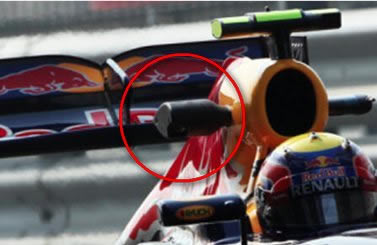
During the 2012 season, for example, Red Bull used an infrared or thermographic camera mounted on the right side of the engine cover, which could film the exhaust gas flow as it exited the exhausts and passed down into the diffuser, measuring and observing the Coanda effect. It appeared as a slightly more bulbous version of the standard FOM camera mounting, but it provided vital information on how the highly sophisticated exhaust system worked.
Some teams use simple GoPro cameras mounted on different parts of the bodywork, pointing at various aerodynamic components and observing them during free practice. This demonstrates the lengths teams will go to in order to fine-tune details of their innovations.
Transponder System
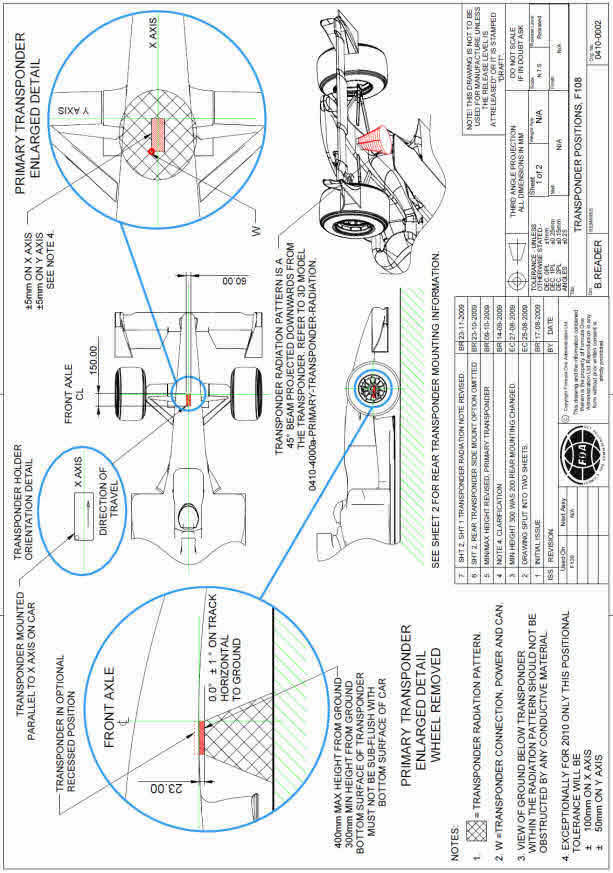
Each car has a transponder unit fitted to it with an ID unique to each car. The transponder transmits this ID when the unit is energised by passing over a timing loop buried in the track surface. These transponders allow the timekeepers to record every lap time of every car throughout the weekend.
The timing loop is effectively two lengths of wire that run across the track and back, functioning as an antenna. Transponders transmit their code constantly when energised. The signal is relatively weak and requires the transponder to be no higher than approximately 60 cm above the surface. Every antenna loop connects to a receiver with a decoder, which decodes the unique ID of the transponder and sends it to the timing software on a main computer. As soon as the start is given, the software is activated, and when each car passes over the start/finish line loop for the first time, it begins counting the time until the car crosses the sector loops and the start/finish loop again, the latter providing the total lap time.
There are auxiliary loops in the pit lane to determine when a car enters and leaves the pit area. A loop is also positioned at the first safety car line to track any rule transgressions for overtaking when the safety car leaves the track and the race is restarted. The safety car has its own transponder and is identified by the system. Several antenna loops are placed around the track, which is why timing split comparisons are available.
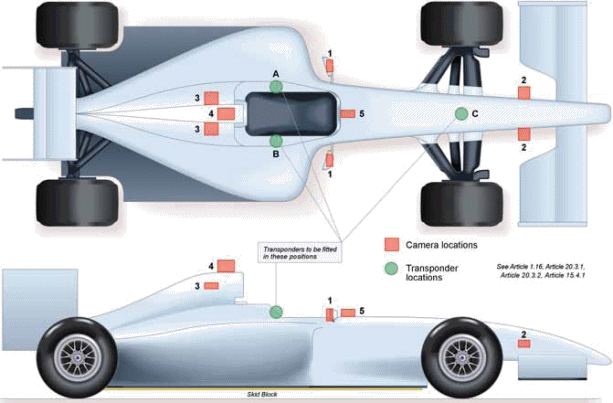
Camera and Transponder Positions (2010 FIA Regulations)
Appendix to the 2010 FIA Formula One Technical Regulations
High-Speed Camera for 2016
Although the FIA already has several means of obtaining information in the wake of an accident, the governing body proposed a new rule for the 2016 season requiring all cars to be fitted with a high-speed camera.
Confirmation of this proposal, which still required ratification by the FIA’s World Motor Sport Council, came in the wake of Fernando Alonso’s crash at the Barcelona circuit during pre-season testing in 2015. The idea had already been backed by F1 teams and chiefs, who voted it through at an F1 Commission meeting held a few days before Alonso’s crash.
Should the rule be ratified, revised Article 27.2 of the Sporting Regulations would be updated to:
“For the purpose of accident analysis, each car must be fitted with a high speed camera which has been manufactured by the FIA designated supplier to a specification determined by the FIA.
“This should be fitted to the car during each event and all tests which are attended by more than one team, teams must use their best endeavours to ensure that it is in working order at all times. “The camera must be fitted in accordance with the instructions of the FIA.”