Shark Fin (Tail Fin)
Purpose and Function
The shark fin in Formula 1 (or tail fin in other racing classes) provides additional space for advertising, but its performance benefits are more significant. The fin acts as a barrier to prevent air from crisscrossing from one side of the engine cover to the other. It functions as a flow straightener by aligning the airflow towards the rear wing, reducing the turbulent air that comes off the back of the airbox unit, and thereby “cleaning” the air that enters the rear wing area to make it more effective.
The shark fin provides stability at the rear when travelling through high-speed corners. The device also acts like a wind vane: its side surface area prevents yaw (tail slide), which helps with stability into turns. It does not contribute significantly at low-speed corners. Furthermore, shark fins do not themselves increase cornering grip, but under braking they reduce yaw and thus increase stability. The fin also better manages airflow close to the engine cover, and in particular reduces turbulence generated by spillage from the engine air inlets (more about air spillage from the airbox can be found here).
History in Formula 1
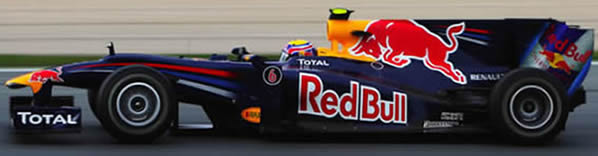
Shark fins gained popularity initially in 2009 with the reduction in downforce from the new aerodynamic regulations, and then in 2010 when the shark fin contained the F-duct air pipe. During this period, teams extended the fin to join with the rear wing, creating both a larger surface area and a more direct path for the air to reach the rear wing. With the ban on F-ducts, the FIA introduced an exclusion area for bodywork ahead of the rear wing, preventing the fin from reaching the rear wing. In 2011, two teams tried truncated fins: Red Bull launched with one but soon dropped it, while HRT chose to run the fin for much of the year.
Varying Opinions on Effectiveness
The aerodynamic benefits are not universally agreed upon. Some teams running the fin say it helps to clean up the airflow over the rear wing; others say it helps the balance of the car; and some claim it does not bring as much benefit as others suggest. The outcome depends heavily on implementation and integration with the rest of the car. One thing most observers agree on, however, is that the fin-shaped engine cover provides valuable advertising space.
Mercedes, for example, considered the shark fin unnecessary extra weight. During wind tunnel testing they found that the shark fin design could split the air and cause approximately 3% of the centre of the rear wing to become redundant, meaning the rear wing would not produce as much downforce as it could without the extended shark fin, potentially making the car unstable in certain sections of the track. This is why some teams used a short shark fin detached from the rear wing, while others ran a full-length version connected to it.
Crosswind Sensitivity
A potential drawback of the shark fin is its effect in crosswinds. The fin can make the car unstable, forcing the driver to make unnecessary steering adjustments. Wind affects F1 cars significantly, and a side-on wind can destabilise the rear. The fin can make the car sensitive to crosswinds, and if the car begins to yaw, the rear wing may be partially masked by the fin, potentially resulting in a loss of downforce and a spin.
Regulatory Changes
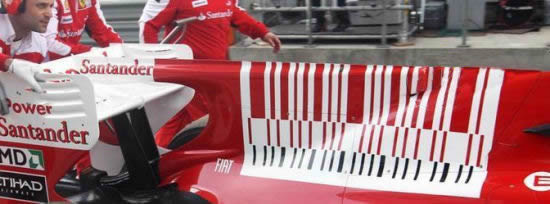
The full shark fin was banned from Formula 1 at the end of the 2010 season. As seen on the Ferrari pictured above, teams had begun using the shark fin with internal ducting to feed the F-Duct. To prevent further controversy, the FIA decided to ban shark fins connected to the rear wing.
The Mercedes 2012 iteration was much like the 2011 Red Bull and HRT designs, with the fin reaching the maximum allowable height and extending as far back as permitted. Despite the widespread belief that the fin had been made illegal, this truncated version remained perfectly legal. One additional benefit, bearing in mind the Drag Reduction System (DRS), is that the flow-straightening effect is especially useful for ensuring that airflow to the rear wing is correctly aligned. To a lesser extent, the shark fin improves rear downforce due to the straightened flow aimed at the rear wing. Additionally, if the rear end moves around on corner entry, the lateral scrub can overwork the tires, and the fin helps prevent this.
Use in Other Racing Categories

Formula 1 is not alone in employing this design. Other racing classes use shark fins for the same reasons. The Audi R18 LMP prototype car from 2011, pictured above, used a shark fin for added stability in high-speed corners and reduced sensitivity to yaw during braking.