Safety car
From the ESPNF1, Steven Lynch blog:
I remember Howden Ganley being told he’d won a Grand Prix - and then everyone looking pretty stupid when it turned out he hadn’t. When was this? asked Mark O’Connell from New Zealand
The New Zealander Howden Ganley had his 15 minutes of fame at the Canadian GP in 1973. The race, at Mosport Park near Toronto, was dogged by rain, and actually was the first world championship race in which a pace car was used, after a collision between Francois Cevert and Jody Scheckter partially blocked the track. There was much confusion about the placings, because cars had been diving in and out of the pits to change tyres as the rain came and went. The safety car was supposed to pick up the leader and, to general surprise, took station just ahead of Ganley, who had started near the back of the grid in his Frank Williams-entered Iso-Marlboro. But Ganley wasn’t actually in the lead, and the mistake allowed the drivers who were really in front of him in the race to make up almost a lap on the rest of the field as they joined the “snake” behind the safety car. When the safety car pulled in, Ganley drove well to keep the “chasers” at bay for a while, but then a battle developed between Emerson Fittipaldi and Jackie Oliver, and at the end of the race the Lotus pit celebrated when Fittipaldi crossed the line first. But the chequered flag stayed down, until a group led by Ganley swept by. About three hours later it was agreed that the man in first place had been in the group led by Ganley - but it wasn’t him, as he turned out to be a lap behind too. No, the winner was actually Peter Revson, the American in a McLaren, with Fittipaldi second: poor old Ganley ended up sixth. That, mind you, was the one of the best results of his F1 career.
History
1973: The pace car was used for the first time during the Canadian Grand Prix.
1992: The first appearance of the safety car at the British Grand Prix.
What Is a Safety Car?
In car racing, a safety car is a vehicle used to limit speed on a racetrack for safety reasons. Safety cars may be used to maintain safe speeds in inclement weather while allowing the race to continue, and they are also deployed to regulate speed in the event of accidents and other incidents on the track. The use of a safety car can be controversial, as it can interfere with the strategy of drivers and racing teams.
How the Safety Car Works
As a general rule, the presence of a safety car is indicated by a yellow flag and an “SC” board, alerting drivers that a safety car is on the track and that a “caution period” is in effect, meaning they must slow down for safety reasons. Dashboard lights, or in Formula 1’s case steering wheel marshalling lights, may also be activated to warn drivers. In some racing categories, the safety car driver may indicate that passing is acceptable, usually by flashing a green light.
In US racing, safety cars are also known as “pacing cars” because they set the pace for the drivers in the race. A pacing car must be driven at a speed that permits optimal performance from the cars on the track while reducing the risk of a dangerous incident. Safety car drivers are usually experienced race car drivers, as they have familiarity with track conditions and know which speeds are safe. The cars are typically high-performance models fitted with special light racks and bold markings for maximum visibility.
Rules and Regulations
Various governing bodies in international car racing have differing rules regarding safety cars. In some racing series, pit stops are banned during the beginning of the caution period, while in others they are permitted. Violating the rules for the caution period can result in penalties or disqualification, so drivers must stay informed of the current regulations. In Formula 1 during the 2008 season, pit stops were banned during the initial phase of the caution period, but most teams strongly opposed this rule and sought to have it changed. For 2009, the rule was revised: the pit lane remains open for pit stops immediately after the deployment of the safety car.
It is expected that, to accompany the revised system for 2009, drivers will need to adhere to a minimum lap time as they drive slowly after deployment of the SC, as has been trialed several times in free practice during year 2008.
It was also agreed that such a rule change could only be implemented if there was an effective way of preventing drivers rushing back to the pits - which could potentially result in them driving at high speed through an accident zone. Tests took place at several races during season 2008. of standard ECU software revisions, which informed drivers during a safety car period of a maximum speed at which they could return to the pits. Drivers will be alerted about the deployment of the Mercedes safety car by the illumination of a yellow cockpit light, and have just five seconds to acknowledge the alarm by pressing an acknowledge button.
The “minimum time system” is possible due to the standard ECU, and GPS positioning.
The new rules represented an improvement but were not perfect. If a driver had just passed the pit entry at the time of race neutralisation, they would need to complete a full lap before pitting. However, the new rule at least prevented drivers from losing places or time against their immediate opponents.
Safety car rules have continued to evolve over the years, with the FIA and FOTA working continuously to improve the system.
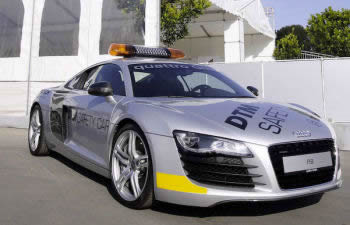
| Audi R8, new Safey Car for 2009 DTM racing category |
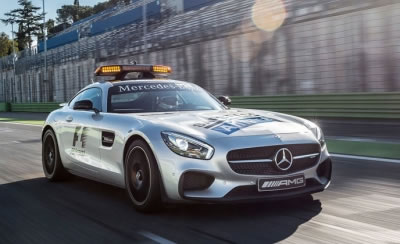
| 1996: C 36 AMG1997: CLK 55 AMG 2000: CL 55 AMG 2001: SL 55 AMG 2003: CLK 55 AMG 2004: SLK 55 AMG 2006: CLK 63 AMG 2008: SL 63 AMG 2010: SLS AMG 2012 (Belgian GP onwards): SLS AMG GT 2015: Mercedes-Benz AMG GTS (left) 2021: first time two official Safety Cars: Aston Martin and Mercedes AMG GTS 2022: Mercedes AMG GTR |
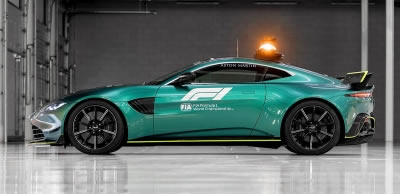
| 2021 Aston Martin – which returns as a manufacturer F1 entrant for the first time in over 60 yearsAston Martin will share the safety and medical car duties with long-time supplier Mercedes. A specially-equipped version of Aston’s Vantage has been developed for the safety car role of intervening and controlling the pace of a race to neutralize the event following an accident or on-track hazard. Engineered by a team at its headquarters in Gaydon, UK, the Vantage benefits from significant chassis and aerodynamic improvements to deliver improved track performance and lap times. |
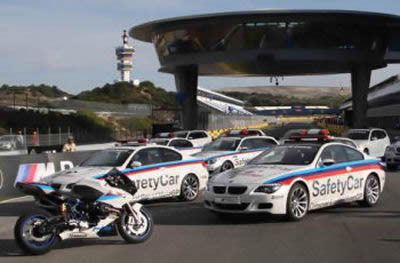
| For MotoGP racing in year 2008, BMW M3 is Safety Car |
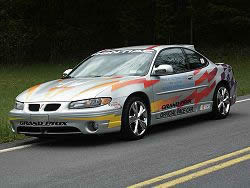
| Pontiac Grand Prix GTP coupe is Winston cup Safety car |
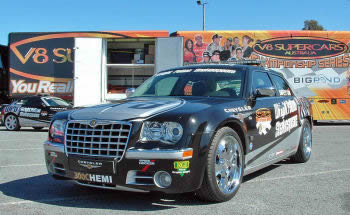
| Chrysler is Australian V8 series Safety Car |
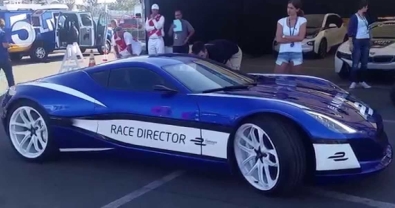
| “Rimac Automobili”, known simply as “Rimac” announced that it is to supply the new all - electric FIA Formula E Championship with one of its exclusive Concept_One supercars. The fully - electric one - of - a - kind car , which can accelerate from 0 - 60mph in the same time as a Formula E single - seater , will be supplied for use by the championship’s Race Director during all race events during seson 2014 - 2015 |