Pitot Tube
(By SonnyT, from F2008 Development thread)
Definition
A pitot tube is a pressure-measuring instrument used to measure fluid flow velocity. It is most commonly used to determine the airspeed of an aircraft and can also be applied to race cars.
History

The pitot tube was invented by Italian-born French engineer Henri Pitot in the early 1700s and was modified to its modern form in the mid-1800s by French scientist Henry Darcy.
Use in Formula 1
Formula 1 teams place pitot tubes in areas where they need to measure air speed. During some test sessions, the pitot tube will be mounted on the nose; at others, it will be positioned high above the engine airbox.
How It Works
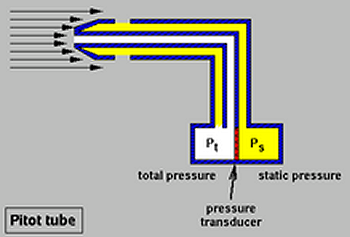
As a pitot tube contains air, a pressure can be measured as the moving air pushes against the tip of the tube and is brought to rest. This pressure is the stagnation pressure of the air, also known as the total pressure, or sometimes (particularly in aviation) the pitot pressure.
The measured stagnation pressure alone cannot be used to determine the airspeed. However, since Bernoulli’s equation states that:
stagnation pressure = static pressure + dynamic pressure
the dynamic pressure is simply the difference between the stagnation pressure and the static pressure. The dynamic pressure is then determined using a diaphragm inside an enclosed container. If the air on one side of the diaphragm is at the static pressure and the other side is at the stagnation pressure, the deflection of the diaphragm is proportional to the dynamic pressure, which can then be used to calculate the indicated airspeed.
Placement Considerations
Because a typical Formula 1 car features many shapes that cause the airflow to accelerate or decelerate as the car passes through the air, teams will move pitot tubes to different locations to gather different data sets.