Heat Shielding
Definition
A heat shield is designed to protect equipment from absorbing excessive heat from an outside source by either dissipating, reflecting, or simply absorbing the heat.
Due to the large amounts of heat produced by internal combustion engines, especially exhausts, heat shields are used on most engines to protect components and bodywork from heat damage.
|
|
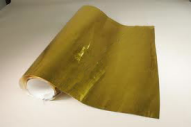
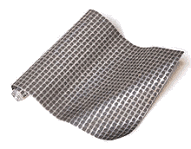
Heat shielding gold foil | ZircoFlexTMHeat Shield Heat shielding flexible aluminium heat shield with ceramic thermal coating |
Types and Materials
Heat shields vary widely in price. In Formula 1, rigid heat shields are made from aluminium or gold sheet or other composites, with a ceramic thermal barrier coating to improve heat insulation. High-performance flexible heat shields sometimes include extras such as ceramic insulation applied via plasma spraying.
Gold Foil Shielding
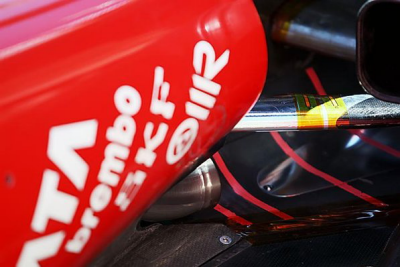
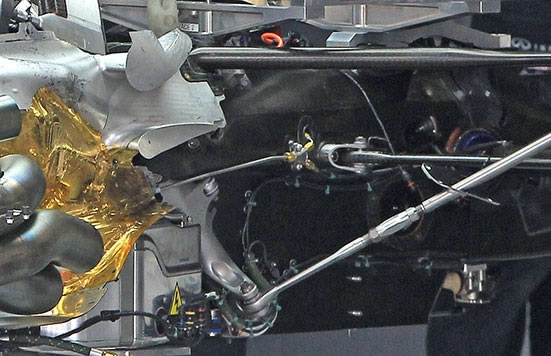
The most commonly used material is gold sheet, frequently seen on lower wing elements or, before the 2014 rules change, covering rear suspension wishbones to protect them from exhaust heat. As a heat shielding material, extremely thin layers of gold effectively reflect radiant heat with almost no mass, needing to be only a few atoms thick to do the job. Gold’s extreme malleability allows the production of these thin foils.
|
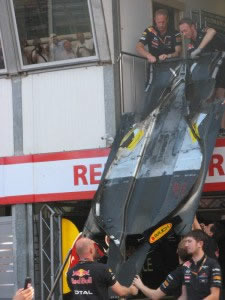
Red Bull Racing gold foil heat shielding in the area around the exhaust, protecting the engine, gearbox, and other vital parts |
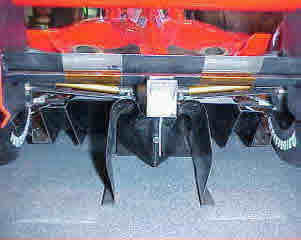
Road car enthusiasts may recall that BMW used gold-sheet heat shielding in the installation of the 6-litre V12 in the McLaren F1 road car. Gordon Murray elected to line almost the entire engine bay of the McLaren F1 with gold cladding because of its superior reflectivity and thermal diffusivity.
Carbon Fibre Floor Protection
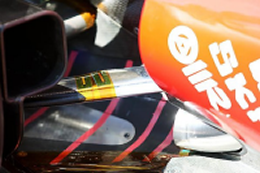
In the area around the low exhaust bodywork with blown diffuser designs on Red Bull and Ferrari cars, no gold foil was typically visible (with the exception of wishbones). With more effective designs pulling exhaust gases down to the car’s floor to seal the diffuser, the carbon fibre floor was also exposed to the heat of the hot exhaust gases. Such single-sided heat exposure poses a risk to the carbon fibre laminate, which may become slightly bent, creating an unwanted effect on the car’s aerodynamics. The severity of this depends on the exact thermal conductivity of the carbon fibres and the temperature resistance of the resin between the sheets. Coatings like Zircotec’s Performance range (known to be used in F1) are obvious candidates for this application.
Advanced Ceramic Materials
Modern technology offers additional solutions where structural integrity and strength are needed. Two notable materials are PyroSic, invented by Pyromeral Systems, and Zircotec products from Zircotec Heat Management.
After 10 years of development, Pyromeral Systems introduced an entirely new generation of materials that brings the advantages of composites to the world of high temperatures. With this technology, it is now possible to design and manufacture lightweight composite parts for use at high temperatures that provide an excellent level of thermo-mechanical performance while remaining easy and affordable to produce. They can be applied at thicknesses from 0.05 mm up to 0.5 mm, depending on the required level of protection. Teams also frequently request that coatings be coloured to help disguise where they are used and which specific products are employed.
| Hybrid composite material:Carbon epoxy (1) and PyroSic (2), covered with a reflective coating (3). |
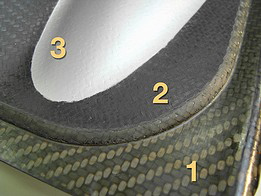
PyroSic and PyroKarb
These new composite materials, marketed under the PyroSic and PyroKarb names, are based on proprietary glass-ceramic matrix systems reinforced with silicon carbide or carbon fibres. Thanks to the use of advanced inorganic polymers, they are processed at low temperatures with the same techniques and tooling as those used for conventional carbon-fibre reinforced plastics (CFRP).
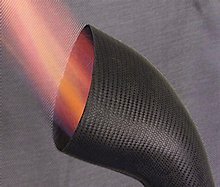
They also offer much improved resistance to heat and fire, retaining good mechanical properties at temperatures for which CFRP cannot even be considered (typically up to 1000 degrees C / 1800 degrees F). The material is lightweight compared to metals like steel, Inconel, or titanium, offers excellent resistance to long-term exposure up to 1000 degrees C depending on the reinforcement, is compatible with applications requiring good mechanical strength and resistance to vibrations, and exhibits dimensional stability at high temperatures.
However, this material is not permitted by FIA technical regulations as an exhaust building material. By FIA rules, exhausts must be constructed from metallic materials. During 2011 preseason testing, Ferrari sought to produce the exhaust in glass-ceramic composite (such as PyroSic), but this request was denied by technical delegate Charlie Whiting, who clarified that the exhaust must be made of materials on the permitted materials list.
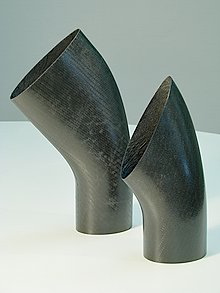
PyroSic materials are glass-ceramic matrix composites based on inorganic thermoset polymers. The glass-ceramic matrices specifically feature a glassy phase containing silicon oxide nanoparticles. These matrices are derived from geopolymeric systems and are inherently resistant to heat and fire.
Applications for PyroSic and PyroKarb include heat shields, exhaust ducts, pipes for hot fluids or gases, fire barriers, and other structural components. The materials are typically used in motorsport, aerospace, defence, naval, or automotive applications, either as a replacement for metals (for weight reduction) or as a replacement or complement for CFRP for improved thermal stability.
Zircotec Ceramic Coatings
|
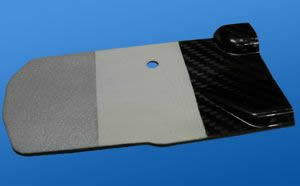
Heat protection within the engine bay on Red Bull Racing floor is a coating applied to carbon fiber floor with Zircotech ZircoFlex (silver color). Additional heat protection is provided with separate gold foil heat shields under the exhaust area. |
Zircotec is another highly recognised company that has developed a range of ultra-high-performance plasma-sprayed ceramic coatings to protect components from the effects of fire, heat, wear, abrasion, and corrosion. Ceramic coatings are highly effective on engine exhaust system components including exhaust manifolds, headers, catalytic converters, turbochargers, and tail pipes. They keep heat inside the exhaust to prevent damage to surrounding components, reduce temperatures, increase engine performance, help solve engine packaging issues, and improve engine compartment safety. Based on the proprietary ThermoHold formulation, these ceramic coatings can only be applied by Zircotec. Zircotec products are in widespread use at all levels of motorsport including F1, NASCAR, World Rally, and Le Mans. In 2010, Zircotec products were used by more than 70% of F1 teams. The coatings are lightweight and highly durable, lasting up to three seasons in many motorsport applications. They can also help engineers deliver more power by reducing engine air intake temperatures.
|
|
Zircotech carbon composite coating for heat shielding | Zircotech ceramic exhaust coating and heat shielding |
| |
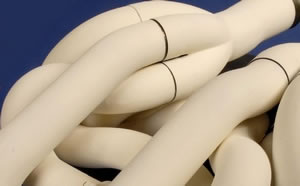
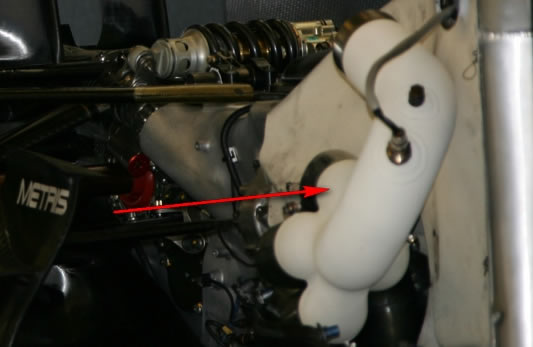
In addition to coatings, Zircotec offers a self-install flexible ceramic heat shield material called ZircoFlex. Typical applications include:
- Heat protection for vulnerable under-bonnet components
- Bodywork protection
- Reduction of heat soak through footwells, bulkheads, and similar areas
Zircotec has developed the technology and facility to manufacture extremely complex ceramic structures using an automated robotic plasma-spray process.
High-Temperature CFRP Development
One area of advancement with particular relevance to racing applications has been the development of CFRP (carbon fibre reinforced polymer) that can resist high-temperature environments while retaining mechanical properties.
With regular epoxy resins used in carbon fibre composites only being suitable for use below 300 degrees C, teams have had to look at protecting exposed panels or finding alternative resin systems to ensure structural integrity. The carbon fibres themselves will not fail due to high-temperature exposure. In the extreme, a section of carbon fibre epoxy composite can be set on fire and the fibre will be untouched; it is the resin system that breaks down and burns off.
Cyanate Ester Resins
For temperatures below about 430 degrees C, cyanate ester-based resins are favoured. These were originally developed by the aerospace industry for use in missile systems.
Cyanate esters are chemical substances generally based on a bisphenol or novolac derivative, in which the hydrogen atom of the phenolic OH group is substituted by a cyanide group. Cyanate ester resins are characterised by glass transition temperatures up to 400 degrees C, excellent dielectric and mechanical properties, and an epoxy-like processing method. They provide excellent long-term thermal stability at elevated temperatures, very good fire, smoke, and toxicity performance. Cyanate esters can be cured and post-cured by heating, either alone at elevated temperatures or at lower temperatures in the presence of a suitable catalyst. Areas of use include electronics, aerospace, automotive, and industrial composites and compounds.
Ceramic Matrix Composites
For applications that exceed the maximum temperature for cyanate ester-based epoxies, suitable composites tend to require complex high-temperature production processes and do not exhibit the same material properties as normal CFRP. These include materials such as carbon-carbon composites found in brake and clutch applications and ceramic-matrix composites, which can withstand temperatures up to 1000 degrees C.
However, a new generation of carbon fibre consisting of glass-ceramic matrices resulting from the polymerisation of inorganic polymers presents interesting options for Formula 1 teams. These inorganic polymers are derived from alumino-silicate-based geopolymeric systems and differ significantly from both organic polymers and conventional ceramic matrices. The result is a lightweight alternative to metals and other materials for heat shields, ducts, and other components exposed to temperatures between 300 and 1000 degrees C.
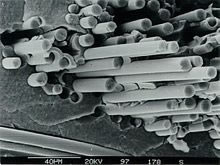
Ceramic matrix composites (CMC) are a subgroup of composite materials and also a subgroup of technical ceramics. They consist of ceramic fibres embedded in a ceramic matrix, forming a ceramic fibre reinforced ceramic (CFRC) material. Typical fibrous materials include carbon, silicon carbide, aluminium oxide, and mullite. Aluminium oxide, zirconium oxide, and silicon carbide are chiefly used as matrix components.
Ceramic matrix composites have found application wherever the combination of breakage resistance and strength of conventional technical ceramics proves inadequate. Even small production errors or scratches on the surface of conventional ceramics can lead to crack formation, making their use in many applications impossible. Only the embedding of fibres proved capable of increasing crack resistance, ductility, breakage strength, and thermal shock resistance – sometimes drastically. The high fracture toughness results from the following mechanism: under load, the ceramic matrix cracks at an elongation of about 0.05%, as with any ceramic material. In CMCs, the embedded fibres bridge these cracks.
The potential for these materials is significant for engineers, as they open up previously unexplored applications for composites.