Exhaust Driven (Blown) Diffusers
Introduction
Rear downforce is very important for driver confidence. If the driver feels good rear-end stability he will push harder, so the gain on the stopwatch from this kind of development is often not what a simulator tells you it will be, but what the driver actually delivers from it.
A diffuser is actually a simple device. A diverging and expanding duct creates a low-pressure area under the car, creating negative lift, i.e. downforce. More about the diffuser itself, you can read in my article here.
A blown diffuser is a way of using exhaust gases to interact with the diffuser airflow. There are two main purposes for this:
- To try to move the wake from the rear wheels outwards where it will cause less disturbance
- To re-energise the low-pressure air at the back of the diffuser to create more rear downforce.
|
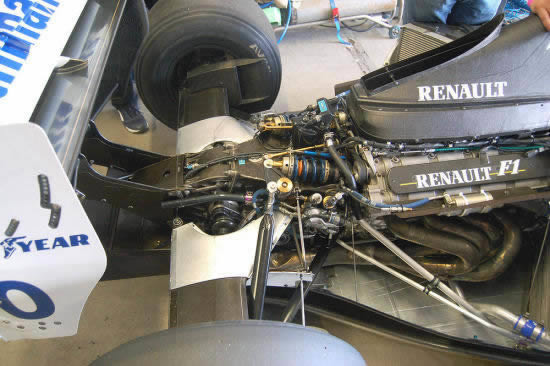
Exhaust blown diffuser on Renault RE40 (V6 Turbo) F1 |
Origins of the Blown Diffuser
The blowing effect of exhausts is not new and has been a factor in Formula 1 since 1983, when Renault first routed their exhausts into the diffuser aft of the flat bottom on the RE40 (V6 Turbo). The idea was first conceived by Renault’s Jean-Claude Migeot, who actually routed both exhaust and turbo wastegate flow directly into the diffuser. At that time, the diffuser was 1,000 millimetres wide and not split like current versions (due to the step-plane regulations).
Before this, everyone had routed the exhausts into the area of least influence, usually above the gearbox or through long pipes running through the rear suspension. This created no downforce benefits. On most cars of this era, the exhausts were treated at best as aerodynamically neutral elements, or at worst as disruptive devices. This is understandable because, in general aerodynamic terms, exhaust jets are particular examples of round jets, a type of turbulent flow. Exhaust jets are sources of heat and turbulence, neither of which appears at first sight to offer any beneficial contribution to downforce.
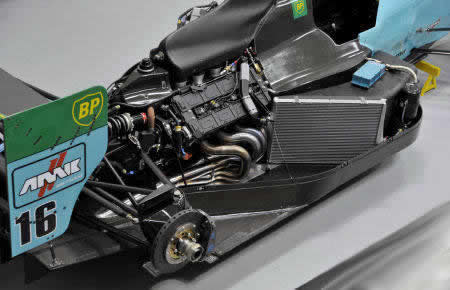
Blown diffuser on MARCH-911b Formula 1 car.Picture above showing engine bay and exhaust pipes entering diffuser. On picture right, exhaust pipes disappearing. |
|
How It Works
The effect of the exhaust gases speeding up airflow through the diffuser improved the venturi effect under the car, energising the flow and the thick boundary layer, and thereby powering the diffuser to gain more downforce without a drag penalty.
The downside was an almost on/off effect (linked to throttle position and the quantity and speed of exhaust gases), with the exhaust blowing varying the downforce effect over the course of a lap. The concept was excellent but not very successful in practice. The problem was that exhaust gases do not maintain a constant speed. The more the driver presses the throttle pedal, the higher the speed and quantity of exhaust gases and the better the diffuser efficiency. Less throttle means lower exhaust gas speed. With lower gas speed, diffuser efficiency drops, and driving with lower downforce at the rear is not pleasant. The worst part is that during cornering, when more downforce is needed, drivers usually need to lift the throttle slightly, losing downforce where it is most needed.
Turbo-charged engines are not critical to exhaust tuning (pipe length and position), and once the exhaust gases have passed through the turbocharger, they have much more constant speed and reduced lag. It was during the turbo era that aerodynamicists discovered that using the exhaust gas flow to blow the diffuser of the flat-bottomed cars increased the airflow extraction under the car, thus increasing downforce. The move away from turbos and their smoothing effect on exhaust flow made this a bigger problem. When the driver lifted the throttle, the flow reduced and the downforce dropped. From this time on, exhaust system design has been a compromise between aerodynamic needs and power, and the two departments (aero and engine) have strenuously researched the effects to make their individual cases for priority.
Diffuser Blowing in Practice
When diffuser blowing first came in, the exhaust was arranged to blow tangentially along the surface of the inclined diffuser. The high-velocity gases entrained air, energising the thick boundary layer and effectively powering the diffuser as it drew air under the car. The fact that the throttles controlled the gas flow would appear to contravene the regulation prohibiting any part of the car that affects aerodynamic performance from being moveable. However, wherever the exhaust exited it would affect the aerodynamics, so diffuser blowing escaped the regulation on the basis that if it were banned, all exhausts would be illegal.
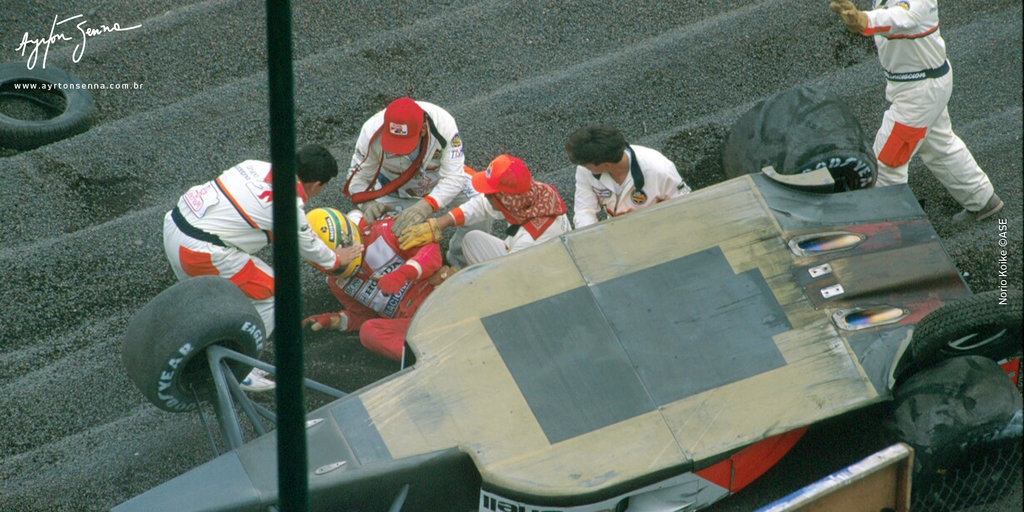
/Big/diffuser_blown_senna__mexico_1991_mclaren-honda_MP47A_big.jpg |
Blown diffuser on Senna McLaren-Honda MP4/7A during Mexico GP 1991. He suffered a big accident at the high speed Peraltada corner during qualifying, in which the car rolled and landed upside down) but thankfully he emerged unscathed. |
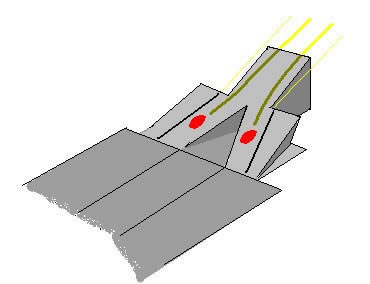
During the construction of an F1 car, wind tunnel models of the Formula 1 car incorporate small, ejector-type, air-driven pumps that simulate the airflow into the ram intake and double as exhaust flow simulation. The effect of throttle-open and throttle-closed can be tested, and the changes in downforce and, more importantly, the centre of pressure of the car can be measured. In recent years, the effect of the exhaust on the centre of pressure and its variation with throttle opening led to the true blown diffuser being abandoned, with exhaust exits moved to blowing over the top of the lower body rear edge. In this position, they probably did more to increase radiator air exit flow than influence the underbody flow.
The Shift to Periscope Exhausts
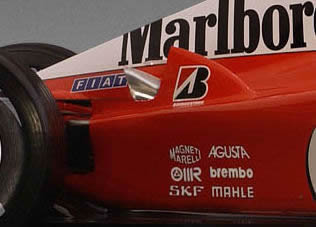
Two further trends led Ferrari to consider and then adopt an alternative exhaust arrangement. In the quest to move weight forward – a result of the width limitation on the rear tires and the grooves in the treads, which led Bridgestone to introduce a wider front tire in 1998 – the engine moved forward relative to the rear of the bodywork, defined in the regulations by the rear axle centre line.
At the same time, peak engine RPM climbed relentlessly upward, reaching 18,000 rpm. Thus, while exhaust pipes needed to become shorter to stay in tune with the higher RPM (higher RPM means shorter pipes; lower RPM means longer pipes), the exhaust pipes had to be longer to reach the trailing edge of the underbody. For Ferrari, the arrangement that provided nearer-optimum-length exhaust pipes by leading them the short distance from the engine to an exit port set into the top surface of the bodywork (chimney) was better than one that still blew into the base region around the trailing edge of the diffuser.
|
Blown diffuser on McLaren MP4/17. Not in the exactly in the plain view, but you have idea |
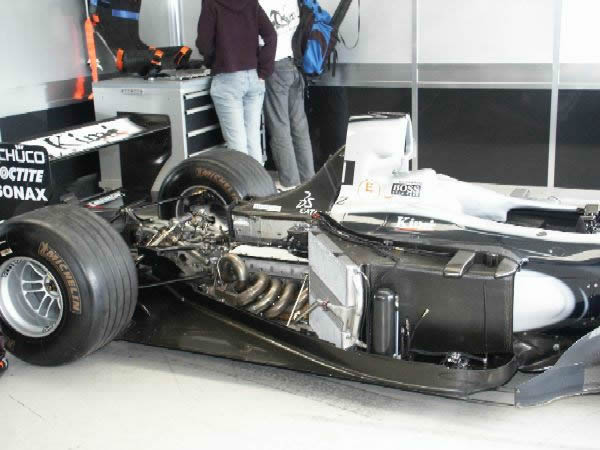
During this period, Adrian Newey’s McLaren MP4-17 blew the exhaust into the centre of the diffuser to improve the flow along the step plane and under the plank. The problem was a very strong on/off effect produced during throttle lift.
Besides these two approaches, there are not many other areas where exhausts could be routed to gain benefit. The exhausts need to be routed around the rear of the sidepods, so there is a limit to the flows that can be affected, and they cannot route beyond the rear edges of the diffuser (as stipulated in the regulations). Exhaust gases can be used for speeding up flow where it is low energy or poor quality (along the step plane, as McLaren did) or for further speeding up flow over an aerofoil (rear wing/flip-ups, as Ferrari did).
FIA Restrictions on Diffuser Performance
The FIA has acted several times since the mid-1980s to cap the potential of the diffuser by reducing its length, height, ride height, and position relative to the rear axle. Moving air through the diffuser is the key to it producing downforce, or “mass flow” as the aerodynamicists call it.
Onset airflow is another factor controlled by the front wing, bargeboards, and the floor itself, but this is somewhat limited by what can be achieved with the restricted devices the rules allow.
Then there is the flow over the top of the diffuser, which has been perhaps the biggest area of development in recent years. By ending the diffuser with a Gurney flap, the airflow over the top of the diffuser can actually aid airflow extraction underneath. This is why sidepods have become slimmer and undercut, and the diffuser appears more exposed amongst the coke-bottle bodywork. Effectively, the harder the air flows over the diffuser, the more powerful the Gurney flap can be in pulling airflow from inside the diffuser. This makes the diffuser act as though the exit is larger and generates more downforce.
Red Bull’s 2010 Exhaust-Blown Diffuser
With the 2009 downforce reduction rules, the diffuser continued to be the dominant factor in aero design. Creating low pressure under the rear of the car’s bodywork remained as important as ever. In 2009, teams exploited rule loopholes to create additional underbody air inlets feeding and energising larger exit areas, known as the double diffuser. In 2010, teams further exploited these rules for even larger inlets and outlets.
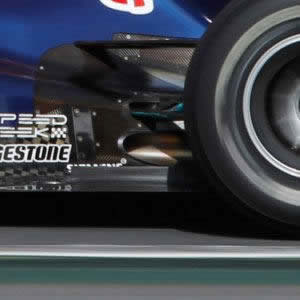
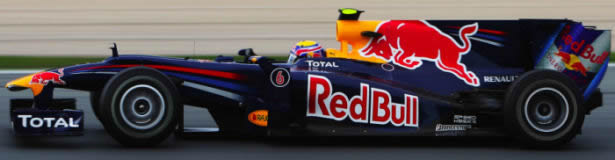
However, it again fell to Red Bull’s Adrian Newey to look at the history book and re-invent a concept that had fallen out of favour. The previous year, he had done the same with the reinvention of the pull rod rear suspension, and in 2010, it was the exhaust-driven diffuser. By mounting the exhaust outlets in line with the floor, they blew through and over the diffuser, driving greater airflow and hence creating more downforce.
Red Bull surprised everyone with their revised car that appeared on the last day of 2010 pre-season testing. The RB6 sported a revised exhaust system with low exits. Although it was first tested with the conventional RB5 exhausts, it was only at the last test day that the team unveiled the secret exhaust development. They even replaced the old exhausts with look-alike stickers to fool the unwary.
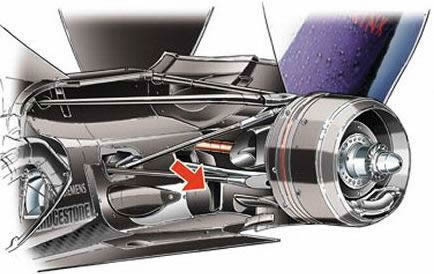
The RB5 that preceded the 2010 RB6 already had high-placed rear wishbones, and this allowed the subsequent car to run exhausts mounted low down, exiting well below the wishbone and avoiding any overheating issues with the carbon fibre suspension components. Teams have run exhausts in very close proximity to the wishbones for many years, employing differing strategies to reduce the thermal load on the carbon fibre wishbones. Either gold foil film, extra carbon fibre heat shields, or ceramic finishes are used to reflect heat. (Check the heat shielding article here).
Contrary to popular belief, the low exhaust position is not related to Red Bull’s pull-rod suspension; in some respects, having the exhaust in close proximity to the pull rod/rocker linkage is undesirable. But the exhaust positioning is probably more sensitive to wishbone position, so much so that teams with low wishbones may have problems packaging the exhaust exit under the suspension. McLaren and Virgin Racing had notably low wishbones.
RB6 Diffuser Design Details
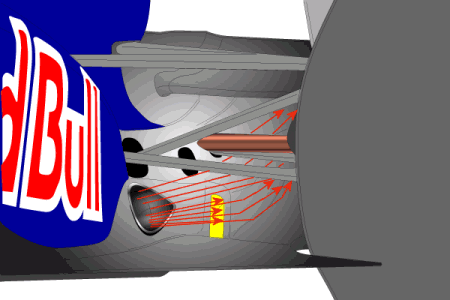
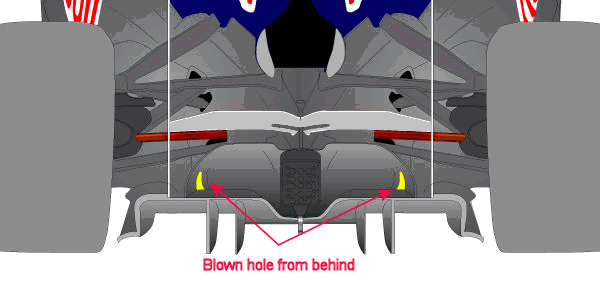
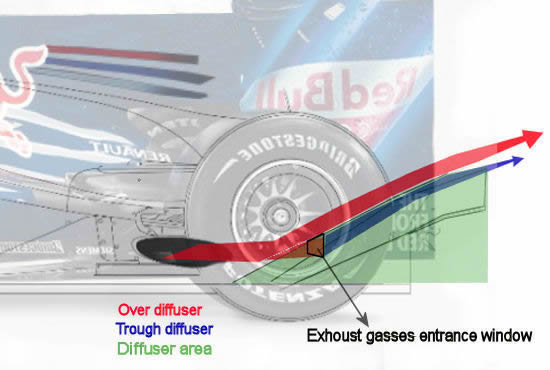
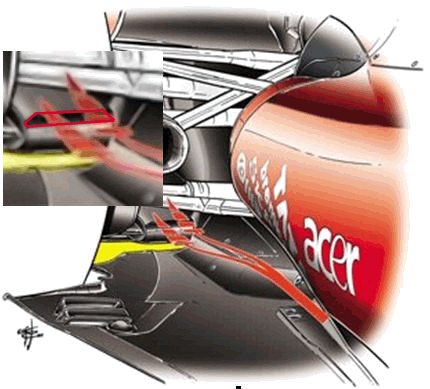
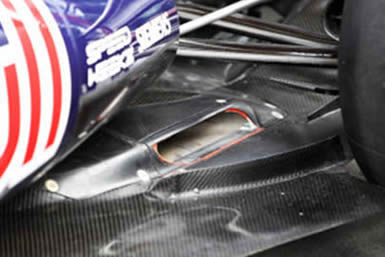
The Newey-designed solution on the RB6 was a little more complicated than it first appeared. Newey made a vertical window in the diffuser to allow the diffuser to be blown both under and over by the exhaust. This helped the airflow going up the outside shoulder of the upper diffuser deck, which probably had little energy and struggled to stay attached, while the high-speed exhaust gas drove more flow through the diffuser to increase downforce.
The criticism previously aimed at exhaust-driven diffusers concerned their sensitivity to throttle position. This issue was mainly related to when the exhausts were placed right on the kickline between the floor and diffuser, making the on/off effect on downforce much more pronounced. The placement of the exhaust exits some way upstream of the diffuser should allow a better compromise between downforce and sensitivity. Newey had considerable experience with blown diffusers: the McLarens retained diffuser exhaust exits all the way to the MP4-17, and even then the switch to periscope (chimney) exhausts was largely driven by other engine packaging factors. Even the stillborn MP4-18 was aimed at having diffuser-exiting exhausts.
Off-Throttle Overrun
One of Red Bull’s secrets was a specific setting and mapping on the Renault engine. These work by forcing fuel through the engines even when the drivers are off the throttle, in a practice known as “off-throttle overrun”.
Red Bull pioneered this technology in 2010 and maximised it in 2011 with strong support from their engine supplier Renault. This kind of engine management had actually been in use in rallying to prevent turbo lag, and Renault had extensive experience with rally cars. All major engine manufacturers developed some form of engine mapping, whether cold or hot blowing. It is not a straightforward process: when an engine is run on a dynamometer with new mapping, it is not a simple step to fit it on the car and run it. Much of the car’s and brake setup must be changed because the new mapping with blowing included fundamentally changes the braking balance and behaviour of the car.
At the end of 2011, off-throttle overrun was banned by the FIA. But what exactly is off-throttle overrun (hot and cold blowing), and what was banned?
Cold Blowing – Normally, the engine only produces enough exhaust gases when the driver is on the throttle, meaning when the driver lifts off, the blown diffuser is suddenly robbed of additional airflow. To improve this situation, some teams devised a solution: when the driver lifts off the throttle pedal, the engine throttles go to 100% open while fuel and spark are cut, so there is no drive from the engine but all the air flows through it, providing about 75% of the exhaust pressure produced at full power. The engine effectively runs as an air pump. The exhaust is still “blowing” into the diffuser, but the airflow is “cold” since no fuel or ignition are involved. All teams had been doing this for about 12 months.
Hot Blowing – Some teams took things a step further. In hot blowing, the ignition is cut when the driver lifts off the throttle, but fuel continues to be injected through the engine’s valves into the exhaust to increase the energy of the gas. This fuel does not ignite inside the engine cylinders but passes through and ignites on the hot exhaust, increasing the amount, speed, and temperature of the airflow exiting towards the diffuser. This results in more downforce. To achieve this, the ignition is retarded and the torque is killed, because otherwise the engine would create torque and continue driving when the driver lifts off the throttle. Clever engine maps prevented the engine from pushing the car in these conditions by retarding the ignition by as much as 35-40% on the overrun. By retarding the ignition when the driver lifts off, the fuel is no longer burnt inside a closed combustion chamber but instead burns in the exhaust pipe, with the expanding gases blowing out of the exhaust exit as though the engine is running. This creates a more constant flow of exhaust gases between on- and off-throttle conditions. This maintains the performance of the blown diffuser and keeps the downforce up when it is most needed. In this way, the main problem of the exhaust-blown diffuser – loss of downforce when the driver lifts off the throttle for a corner – was largely avoided.
This technique cannot be used for the entire duration of a race, as engine temperatures rise dramatically, which damages the engine, but it provides the vital fractions of a second that kept Red Bull ahead in qualifying. The problem is that this engine mapping uses more fuel and creates excessive heat in the exhaust pipes and at the exhaust valve. Renault reported that both Red Bull and Renault used 10% more fuel in Melbourne compared to the previous year, most likely due to these off-throttle mappings.
Another misconception about the low exhaust position is its effect on tire temperature. It is possible that the exhaust does affect the inner shoulder of the rear tires, but this may well be an effect teams want to discourage. Any tyre heating will certainly be a secondary benefit and not the sole reason for going with low exhausts. Notably, Red Bull ran a fence on the floor between the exhaust and the rear tire, which probably helped keep unwanted heat from the tires. But in Canada, where tire temperatures were low, this fence was removed. The tire heating effect could potentially be a tuneable parameter by varying the heat shielding around the coke-bottle area.
Other Teams Follow
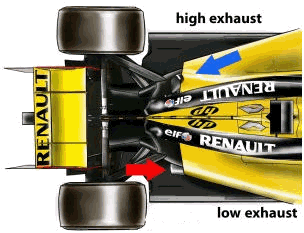
Other teams naturally wanted to dissolve Red Bull’s advantage and started developing their own blown diffusers. By the 2010 European GP in Valencia, Ferrari, Renault, and Mercedes had followed Red Bull’s exhaust/diffuser solution. McLaren and Williams were expected to follow at Silverstone. Ferrari, Renault, and Mercedes started with a diffuser blown only over the top, without a window, which perhaps offered less potential than a through-blown diffuser but would at least remain legal the following year when the double diffuser was banned by new rules preventing openings in the diffuser. The blown element operated independently of the “double” element, and while double diffusers were banned from the next season, the blown diffuser was there to stay.
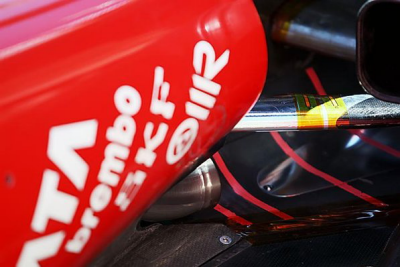
At the end of the 2010 season, Ferrari perfected their own blown diffuser. In place of the vertical windows used by Red Bull Racing’s RB6, Ferrari employed horizontal slots over the top of the diffuser.
|
The neatly-packaged Red Bull exhaust exit in the beginning of 2011 |
Effectiveness and Championship Impact
A blown diffuser increases downforce on all corners, with the greatest effect on medium- to low-speed corners. The exhaust-blown diffuser is most effective on the exit of 80 to 100 km/h corners, where standing on the throttle gives the driver significant extra downforce relative to the level the car already has. It becomes increasingly less effective the faster the car goes. This is why Red Bull was so strong on tracks with medium-speed corners.
Red Bull Racing clinched both the constructors’ championship and the drivers’ crown with Sebastian Vettel at the victory in Abu Dhabi, the last race of the 2010 season. Vettel became Formula 1’s youngest-ever world champion at just 23 years old. This achievement is testament to the quality of the outfit, with Adrian Newey as technical director and principal designer.
2011-2012: The Ban on Blown Diffusers
In 2011, the top teams focused substantial resources on extracting aerodynamic performance from their car’s exhaust gases. By channelling the gases through the diffuser, the teams boosted rear downforce, and they also developed engine maps that kept the gases flowing even when the driver was off the throttle.
For the 2012 season, the FIA outlawed blown diffusers and teams were forced to run with periscope exhausts. Teams were told there would be stricter limitations on engine mapping, as part of a clampdown by the FIA to prevent the exploitation of exhaust gases.
With the FIA keen to ensure that off-throttle blowing of exhausts did not continue, the governing body issued a Technical Directive informing teams that the 2012 version of the standard ECU software would put certain limitations on engine mapping. Although the positioning of exhaust tailpipes would be more tightly controlled, there remained some potential for off-throttle engine mapping to be exploited.
Although the FIA move was not welcomed by all teams, with some expressing reservations at the Technical Working Group, the majority welcomed it because it effectively removed a grey area of car development.
The FIA had argued earlier in 2011, during an intended push to ban off-throttle blown diffusers (which eventually had to be abandoned), that such extreme engine maps breached the famous Article 3.15 of F1’s Technical Regulations. This was based on the view that there was an aerodynamic benefit from a moveable part (engine and throttle) and that it was being influenced by the movement of the driver through the throttle. Neither is allowed in the rules. The changes to the technical regulations threw things back into the melting pot, and it remained to be seen who had done the best job of reinterpreting them. The change in exhaust exit pipe position, diameter, and profile led to a loss of rear-end downforce, sending aerodynamicists searching for fresh ways to regenerate it and rebalance their cars.
2012: The Coanda Effect Solution
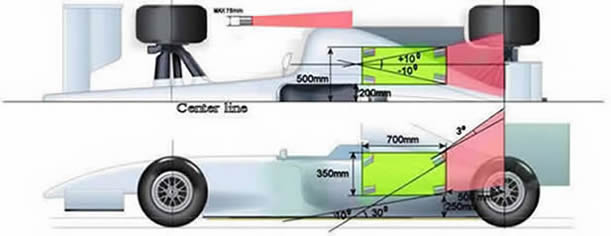
New positioning of the exhaust pipe exits and limitations are shown in the picture below. Exits of the pipe could be positioned inside the green box, with the exhaust tailpipe pointed upwards.
But this was not sufficient to eliminate exhaust-blown diffusers. The first thing to note is that while it was not possible to point the exhaust exit down at the diffuser in the same way as before, this did not necessarily prevent the exhaust jet from blowing in that direction. When an exhaust jet exits into a cross-stream of fresh air, the exhaust jet bends with the airstream, an effect called “downwash”.
|
Picture from paper published by F. L. Parra and K.Kontis in their 2006 “Aerodynamic effectiveness of the flow of exhaust gases in a generic formula one car configuration” |
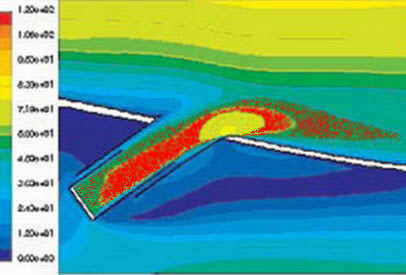
If the exhaust exit is placed flush in the rearward face of the sidepods sweeping downwards at a fairly steep angle, the free-stream airflow can deflect the exhaust jet downwards towards the diffuser. The degree to which the jet is deflected is determined by the ratio between the velocity of the jet and the velocity of the cross-stream flow. The smaller the ratio, the more the jet is deflected. This effect is well documented and often termed “jet in cross flow”.
After that, the Coanda effect (Coanda – the tendency of a gas or liquid coming out of a jet to travel close to the wall contour, even if the wall’s direction of curvature is away from the jet’s axis) takes over and “glues” the now-energised air stream (mixed with the exhaust jet) to the bodywork. The secret is to design this part of the bodywork and the bodywork in front of the exhaust exit in a way that optimises this effect and provides a proper and exact route for the gases to flow in the desired direction. The effect of diffuser blowing is not as strong as before, but with clever design and optimisation, a few percent of additional downforce can be gained. With this setup, the exhaust plume is curved downwards by both the shape of the bodywork aft of the tailpipe (Coanda) and by the airflow passing over the sidepod (downwash).
During 2012 pre-season testing, several teams adopted this new solution. Sauber Racing and McLaren found a way of shaping the sidepod and exhaust fairing to use these effects. They were able to consistently direct the exhaust jet at the gap between the diffuser and rear tire. McLaren’s exhaust/sidepod solution proved to be the most widely adopted and was termed a “Coanda” exhaust by the media (though this is arguably an inaccurate term, as the downwash effect is probably greater than the Coanda effect compared to other sidepod shapes such as Red Bull’s). They came first, followed by Ferrari, Force India, Toro Rosso, Sauber, and Caterham, then Williams and others. Lotus was the last team to follow the trend, introducing its Coanda-effect exhaust system in Korea on Kimi Raikkonen’s car, providing exhaust-boosted airflow over the rear brake ducts and around and over the diffuser sides. Raikkonen continued to use it in qualifying and the race, while team-mate Romain Grosjean kept the old central-blowing exhaust, which provided slightly more engine power. This left just Red Bull following the fully ramped sidepod design, and HRT remaining with a simple periscope exhaust setup.
Diffuser Sealing Effect
The diffuser has low pressure inside, which draws in high-pressure airflow from outside, reducing its downforce. Additionally, the tire wake sends an unwanted jet of airflow into the diffuser, known as “tire squirt”.
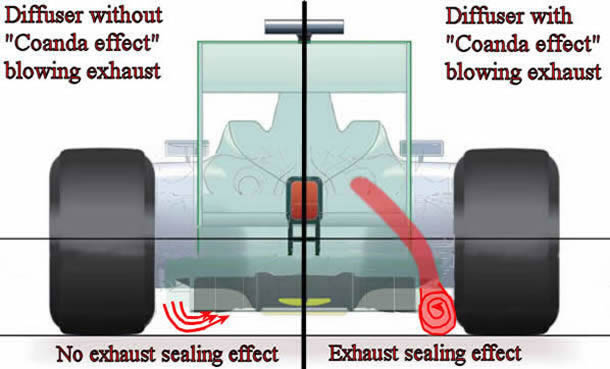
Unable to blow directly into the diffuser since the 2011 rule changes, the gases are guided down channels inside the rear wheels, sealing the gap between the tires and the outer side of the diffuser. This serves as a skirt to seal the side of the diffuser from leakage. Having the exhaust blow along the diffuser’s edge keeps these pressure regions separate and prevents the tire squirt from upsetting the diffuser. Preventing these effects means the diffuser creates higher levels of downforce at high rear ride heights and large degrees of car rake, and is more efficient. An additional benefit is that it allows the team to run a higher rear ride height, which effectively makes the diffuser larger and further increases its potential to make downforce.
2013: Red Bull’s Continued Dominance
During 2013, the last year before radical changes in engine, exhaust, and ERS regulations, Red Bull, Lotus, and Sauber were the only teams who had their rear bodywork designed and optimised to guide the exhaust gases all the way down to the target area (Sauber achieved this only in the last couple of races). Other teams tried to follow their lead with varying degrees of success.
During 2011, 2012, and 2013, Sebastian Vettel appeared to be the only driver who adapted his driving style to use the exhaust-blown diffuser to best effect. The rest of the field had it on their cars but had not adapted their driving approach as effectively. Red Bull’s system itself was also superior. Without doubt, they pushed everything in this area to the limit, but that option was available to everyone. Vettel exploited the fact that the system gave him more rear grip if he nailed the throttle very early after the apex, so that is exactly what he did.