Carbon Fibre
|
|
What Is Carbon Fibre?
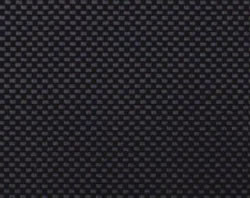
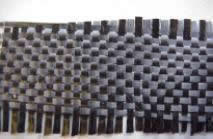
Carbon fibre (also called graphite fibre) is a polymer made from another polymer called polyacrylonitrile through a complex heating process. It is a form of graphite material consisting of extremely thin fibres about 0.005-0.010 mm in diameter, composed mostly of carbon atoms. The carbon atoms are bonded together in microscopic crystals (hexagonal aromatic rings) that are more or less aligned parallel to the long axis of the fibre. This crystal alignment makes the fibre incredibly strong for its size. Several thousand carbon fibres are twisted together to form a yarn, which may be used by itself or woven into a fabric.
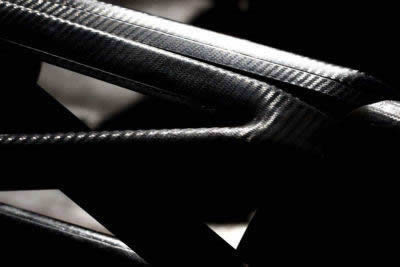
Carbon fibre can be combined with epoxy and wound or moulded to form composite materials such as carbon fibre reinforced plastic (also referred to as carbon fibre), providing a high strength-to-weight ratio material. The density of carbon fibre is considerably lower than the density of steel, making it ideal for applications requiring low weight. Properties such as high tensile strength, low weight, and low thermal expansion make it very popular in aerospace, military, motorsports, and other competitive sports. The distinctive appearance of carbon fibre also makes it popular for stylistic purposes.
These fibres are not used by themselves. Instead, they reinforce materials like epoxy resins and other thermosetting materials. These reinforced materials are called composites because they contain more than one component.
Carbon fiber Specific elastic Modulus | Carbon Fatigue resistance |
|
|
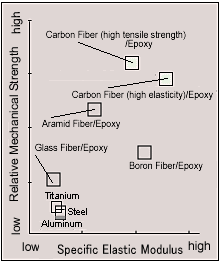
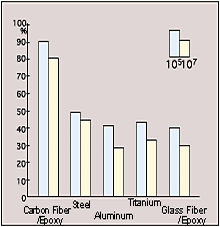
Carbon fibre reinforced composites are very strong for their weight. They are often stronger than steel but much lighter. Because of this, they can be used to replace metals in many applications, from aircraft and spacecraft parts to tennis rackets and golf clubs.
Manufacturing Process
The manufacturing process begins with polyacrylonitrile (PAN), which is heated through a series of stages. The exact chemistry is not fully understood, but the process is broadly as follows: when polyacrylonitrile is heated, the heat causes the cyano repeat units to form cycles.
Further heating at higher temperatures causes the carbon atoms to shed their hydrogen atoms, and the rings become aromatic. This polymer becomes a series of fused pyridine rings.
Additional heating at around 400-600 degrees Celsius causes adjacent chains to join together, expelling hydrogen gas and producing a ribbon-like fused ring polymer.
The temperature is then raised further, anywhere from 600 to 1,300 degrees Celsius. At these temperatures, the newly formed ribbons join together to form even wider ribbons, expelling nitrogen gas in the process. These wide ribbons can then merge to form even wider ribbons.
As this process continues, more and more nitrogen is expelled. When complete, the ribbons are very wide and most of the nitrogen is gone, leaving ribbons that are almost pure carbon in graphite form – hence the name carbon fibres.
Spools of raw carbon fibre
| > ##### Some of weaving types of Carbon fibers |
|
Plain Weave |
|
2X2 Twill Weave |
|
4X4 Twill Weave |
|
5 Harness Satin |
|
8 Harness Satin |
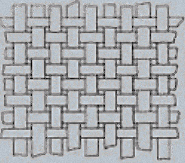
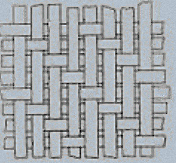
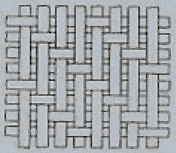
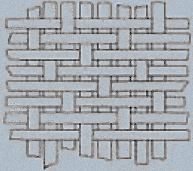
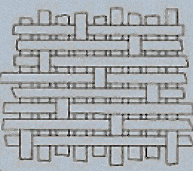
Types of Carbon Fibre
Carbon fibres currently in industrial production are classified into PAN-based, pitch-based, and rayon-based types. Among them, PAN-based carbon fibre has the largest production volume and widest use. In the early 1970s, commercial production of PAN-based and isotropic pitch-based carbon fibres began on a large scale. In the latter half of the 1980s, anisotropic pitch-based carbon fibre manufacturers entered the market.
Carbon fibre by itself is not typically used alone. Commonly, it is applied as reinforcement and/or a functional component of composite materials, combined with resin, ceramic, or metal matrices. Carbon fibres are extensively used in a wide variety of applications due to their outstanding mechanical characteristics (specific tensile strength, specific modulus) and other properties inherent to carbon (low density, low coefficient of thermal expansion, heat resistance, chemical stability, self-lubricity, high thermal conductivity, and more).
Carbon fibres with their superior characteristics are adopted in wide varieties of uses. Suppliers are able to provide fibres with different specifications by using different raw materials and applying divergent production processes.
PAN Type Carbon Fibre
PAN type carbon fibre, produced by carbonisation of a PAN precursor (polyacrylonitrile), has high tensile strength and high elastic modulus. It is extensively applied for structural material composites in aerospace, industrial, and sporting/recreational goods.
PAN type carbon fibre is an aggregation of continuous filaments, 5-7 micrometres in diameter with a density of 1.74-1.95 g/cm3 generally. Products with various filament counts, such as 1K (1,000 filaments), 3K (3,000 filaments), 6K (6,000 filaments), 12K (12,000 filaments), and 24K (24,000 filaments), referred to as “Regular Tow” or “Small Tow,” have been used in large quantities for aircraft and sports/recreational applications, capitalising on low density, high specific tensile strength, and high specific elastic modulus. PAN fibres have played a key role in the market expansion of carbon fibres.
Large Tow (over 40K), despite slightly lower tensile strength, is mainly used for industrial applications as a relatively inexpensive material alongside Regular Tow. PAN type carbon fibres are classified into Standard Elastic Modulus Type (up to 240 GPa), Intermediate Elastic Modulus Type (up to 300 GPa), and High Elastic Modulus Type (350 GPa and above).
Pitch Type Carbon Fibre
Pitch type carbon fibre, produced by carbonisation of oil/coal pitch precursor, has properties ranging from low elastic modulus to ultra-high elastic modulus. Fibres with ultra-high elastic modulus are extensively adopted in high-stiffness components and various applications utilising high thermal conductivity and/or electrical conductivity.
Pitch type carbon fibre includes both continuous and discontinuous types, based on their respective spinning processes. It is also classified into Isotropic Type (low graphitisability) and Anisotropic Type (high graphitisability), based on the raw pitch used.
Isotropic pitch type carbon fibre is commonly a discontinuous fibre of 12-18 micrometres in diameter with a density of 1.6 g/cm3. It has properties of low modulus (up to 40 GPa), strength, and thermal conductivity due to weak structural orientation of carbon atoms and underdeveloped graphite crystallinity. With its competitive cost, it is extensively applied in industrial fields due to light weight, chemical stability, heat resistance, and abrasion characteristics.
Carbon fiber under microscope
Anisotropic pitch type carbon fibre is sometimes referred to as “Mesophase Pitch Type Carbon Fibre.” This fibre is commonly a continuous filament of 7-10 micrometres in diameter with a density of 1.7-2.2 g/cm3. Available in 1K, 2K, 3K, 6K, and 12K filament counts per tow, it has a wide variety of elastic modulus grades from 6 GPa (the lowest) to 953 GPa (the highest), whereas PAN type carbon fibre cannot achieve this range. The High Elastic Modulus Type (350 GPa and above) has excellent processability due to high tensile strength exceeding 2.5 GPa, and has been extensively applied in industrial and sports/recreation fields utilising higher stiffness than iron and light weight (50% or less than iron) as moulded composite materials. Applications for Ultra High Elastic Modulus Type (600 GPa and above) are expanding, utilising excellent stiffness, thermal conductivity equivalent to or higher than metals, and lightness in weight.
Plain weave fabric surface finish smoothness |
Spread tow fabric (STF) deliver improved surface smoothness by reducing interlacing points |
Spread Tow Fabric in Formula 1
As technology has advanced year after year, new fibres and resin systems offering improved mechanical and thermal capabilities have entered Formula 1, eagerly adopted by engineers. This advancement is especially visible in the area of weave design for composite fabrics.
Most Formula One components are traditionally manually laminated using continuous pre-impregnated (pre-preg) carbon fibre reinforcements with either unidirectional (UD) fibres or woven fabrics, often referred to as cloth.
|
Ferrari F14T 2014 showing interrior of his sidepods woven with STF |
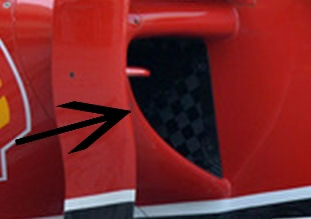
Conventional cloth weave designs commonly include plain weaves, 2x2 twills, and satin weaves. Each has different surface finish smoothness and strength. The combination of different characteristics in each individual weave style involves some level of compromise, which has driven research and optimisation of weave design.
Advances in textile engineering and manufacturing have resulted in the development of spread tow fabric (STF) materials. Instead of bundling the carbon fibres in narrow and thick tows, spreading the fibres into thin and wide tapes and then weaving these together allows ultra-lightweight fabrics to be produced. This offers a number of benefits over more traditional cloth designs. The flat structure of STFs reduces the frequency of crimp angle (the undesirable distortion of the fibres produced by the interlacing of the warp and weft tows, which is detrimental to mechanical performance) while improving the resin wet-out (resin impregnation of the fibre reinforcements). This results in high fibre volume with straighter fibres, increasing the mechanical properties of the laminate while reducing the amount of excess resin, therefore minimising weight by 20 to 30%, giving mechanical performance similar to a cross-ply construction made using UD tapes. STF also delivers improved surface smoothness by reducing interlacing points.
|
Engine cover woven with combination of STF and unidirectional (UD) fibres or woven fabrics often referred to as cloth, as required. |
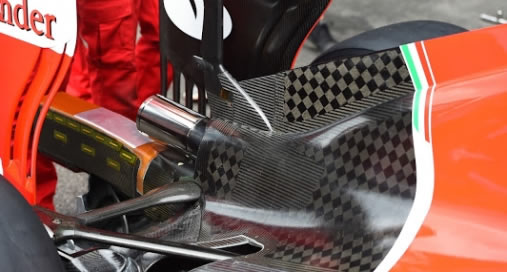
Ultimately, the significant weight savings, improved mechanical properties, and thinner laminates are why STFs have found a home in Formula One racing cars, with many components – including the monocoque, bodywork, and floors – benefiting from the superior performance this composite offers.
Carbon fibres have low specific gravity, outstanding mechanical properties (high specific tensile strength, high specific elastic modulus), and attractive performance characteristics (electrical conductivity, heat resistance, low thermal expansion coefficient, chemical stability, self-lubrication, high thermal conductivity, and more). These features have stimulated the development of numerous kinds of applications.
History of Carbon Fibre
Dr. Roger Bacon created the first high-performance carbon fibres at the Parma Technical Center outside of Cleveland, Ohio. The first fibres were manufactured by heating strands of rayon until they carbonised. This process proved to be inefficient, as the resulting fibres contained only about 20% carbon and had low strength and stiffness properties. In the early 1960s, a process was developed using polyacrylonitrile as a raw material. This produced a carbon fibre that contained about 55% carbon and had much better properties. The polyacrylonitrile conversion process quickly became the primary method for producing carbon fibres.
On 14 January 1969, Carr Reinforcements wove the first ever carbon fibre fabric in the world.
During the 1970s, experimental work to find alternative raw materials led to the introduction of carbon fibres made from a petroleum pitch derived from oil processing. These fibres contained about 85% carbon and had excellent flexural strength.
Manufacturers
PAN aerospace/high-end carbon fibre:
Toray (largest worldwide manufacturer)
Nippon Graphite Fiber Corporation