Barge Boards and Turning Vanes
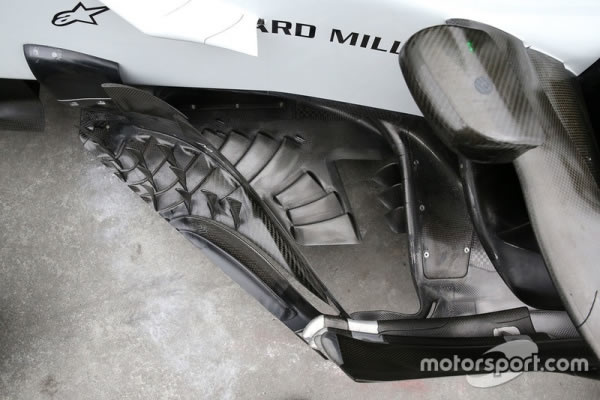
Simple, old style of barge boards
More sophisticated BMW 2007 style of barge boards - vortex generators
Origins and Function
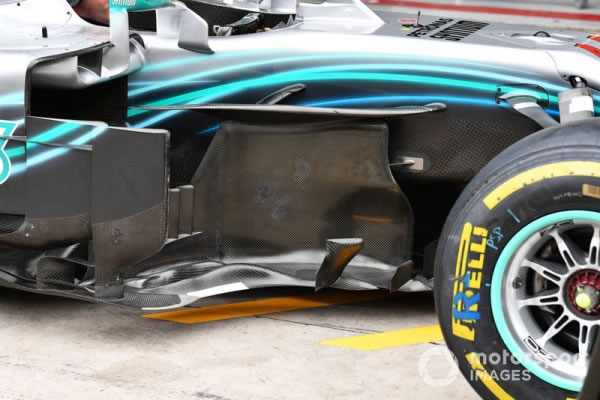
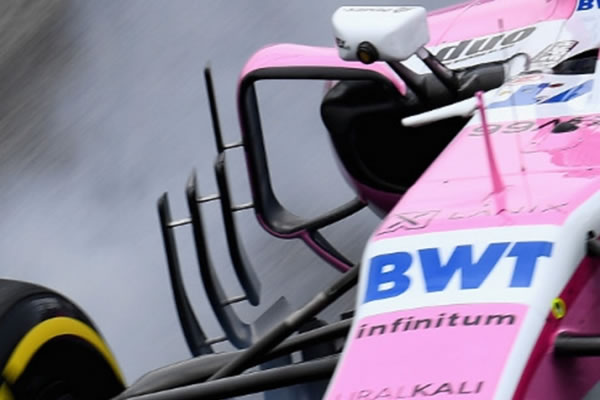
Turning vanes – the vertical plates, usually curved, mounted on either side of the chassis between the front wheels and the sidepod air intakes – first appeared on F1 cars in the early 1990s. In the late 1990s and early 2000s, they became very complex devices, often with multiple elements. During this period, cars also sprouted turning vanes in various other positions around the car, such as on the edges of the sidepods and under the nose.
FIA regulation changes introduced for 2009 resulted in simpler turning vanes and restricted their positioning, but they remained important aerodynamic devices. Turning vanes are so called because they are designed to turn the airflow around the car. They have multiple functions but are used predominantly to control the turbulent wake from the front wheels and to scavenge air from the front wing and under-chassis area, turning the airflow towards the sidepods, floor, and diffuser.
Aerodynamic Role
Barge boards were once considered primarily a feature for shielding the radiator ducts from the turbulent wake of the front wheels. However, in more recent designs, they were replaced by complex vortex generators that direct vortex cores under the car to feed the rear diffuser with high-energy flow, increasing its effectiveness. Traditional barge boards may have induced a similar effect, though less efficiently.
Barge boards also guide turbulent air from the front wing wake away from the vital airflow underneath the car. In addition, the lower trailing edge of a barge board creates a vortex that travels down the outer lower edge of the sidepod, acting as a skirt or dam to help seal the lower-pressure area under the car. These techniques demonstrate the continued use of ground effect principles in Formula 1.
The barge boards also slow down the air entering the sidepods, reducing both the speed and quantity of air reaching the radiators and engine bay. They also reduce the drag of the exposed sidepods.
Regulation Changes and Evolution
Ferrari’s 2009 World Championship contender, the F60, featured small bargeboards adapted to the 2009 FIA Technical Regulations.
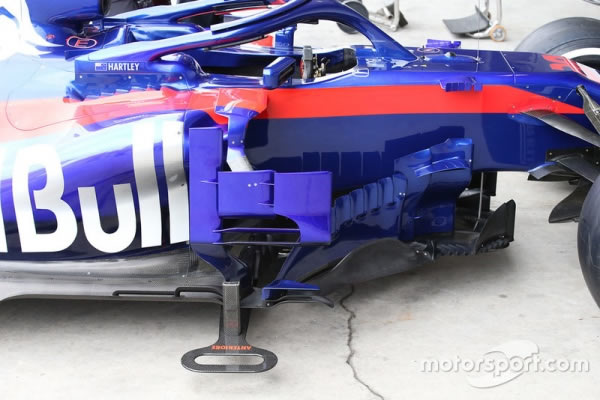
Despite various measures and rule changes from 2008 to 2009 aimed at simplifying the aerodynamics of Formula 1 cars, teams continued to explore all possible areas for aerodynamic gains. The area under the nose and ahead of the sidepods proved interesting for development because it was not as strictly regulated. As a result, barge boards remained a feature of F1 cars.
After further aerodynamic rule changes during 2015 and later seasons, the area in front of the sidepods became relatively free to develop, and barge boards evolved into works of art – very expensive to develop, and extremely complex and sophisticated.