Roll Stabilizers
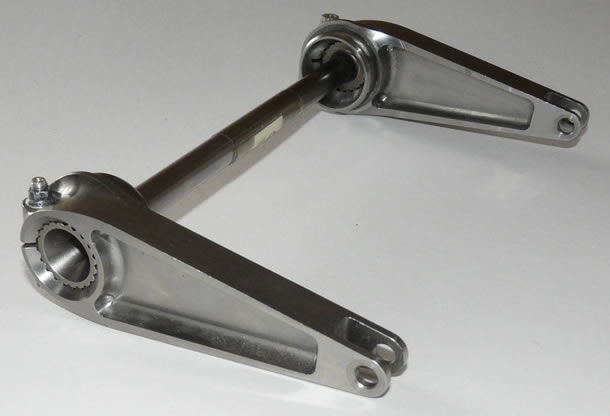
| Roll stabilizer in dark blue color |
Basic Function
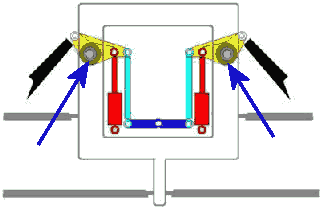
Anti-roll bars (also known as roll stabilizers or sway bars) control the roll of the car from side to side and help stabilize the car during cornering.
Weight transfer during the roll (left corner)
Weight transfer during the roll (right corner)
How Anti-Roll Bars Work
When both wheels are on the same level, the anti-roll bar does not affect the suspension motion. When one wheel rides over a bump, the anti-roll bar is twisted and transfers force to the other wheel, pushing it down so the car body remains balanced. The thicker the bar, the greater its anti-roll capability.
Based on this description, one might expect that the anti-roll bar could introduce even more roll when the car is subjected to cornering forces. However, this impression is incorrect.
When body roll occurs due to cornering, the outside wheels are compressed, and the anti-roll bars push the inside wheels away from the body. Does this action result in more body roll? No. Even without the anti-roll bar, the inside wheels would remain in contact with the ground (due to the weight of the car and the expansion force from the springs), and would therefore be pushed away from the body naturally. In other words, the anti-roll bar does not alter the natural movement of the inside wheels.
|
Typical Anti Roll Bar |
On the contrary, the twist torque of the anti-roll bar always works to resist compression in the outside suspension. Therefore, it also reduces body roll.
The advantage of the anti-roll bar is clear: it suppresses body roll over bumps and during cornering, without deteriorating ride comfort in a straight line.
Stiffness Settings and Handling
A stiff stabilizer makes the car respond well to sharp turns, creating a more stable feel. The downside is that if the stabilizers are too stiff, they reduce weight transfer to the outside tires, reducing grip during cornering and causing understeer or oversteer. A softer setting allows the car to lean into the turn, providing greater grip. However, if the setting is too soft, the car becomes unresponsive.
If the car understeers too much, the front stabilizers should be softened or the rear stabilizers stiffened. Making the front stabilizer softer than the rear reduces understeer.
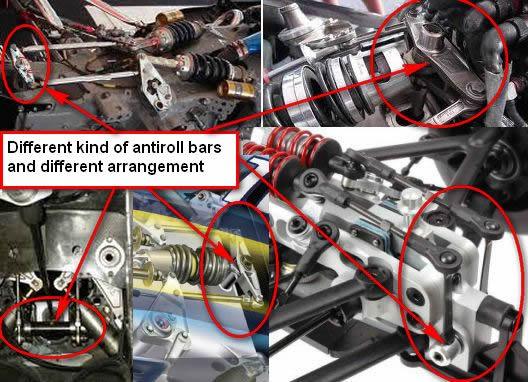
|
Lower right (rear suspension) and left (front suspension) type of antiroll bars is basically the same as one on the upper picture |
Front-Engined Cars
Front-engined cars exhibit a slightly different response. A higher front stabilizer setting than the rear is typically preferred. This reduces body roll of a front-engined car, keeping both tires firmly on the road rather than shifting all the weight to the outside tires and reducing grip.