ADR - Accident Data Recorder
Overview
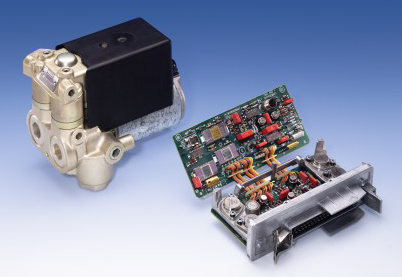
The Accident Data Recorder is essentially a black box for Formula 1 cars. The FIA has fitted Accident Data Recorders (ADR) to all Formula 1 cars since 1997, and has also fitted them to Formula 3000 and GP2 cars from 2000 onwards.
Data is recovered, where possible, from all incidents in which control of the car has been lost and the car either impacts another car, leaves the track and is arrested in a run-off area, or impacts a barrier.
How the ADR Works
FIA Accident Data Recorders store data from all of the car’s key sensors and two FIA-specific accelerometers. These allow the FIA to use the ADR as an aircraft-style black box recorder to gather data on accidents. Should the car be involved in a major crash with forces exceeding 18 g, the ADR will trigger a medical warning LED light on the cockpit top to warn marshals of the severity of the accident, allowing them to take appropriate care with the driver.
The recorded parameters include 3-axis, high-g (+/-250g) and low-g (+/-50g) accelerometers, car speed, throttle and steering inputs, the lap marker, and from 2000 onwards, yaw rate. The data is analysed to determine the deceleration on the track and the performance of circuit safety features such as run-off areas and barriers.
Data Analysis and Applications
It is sometimes possible to determine the cause of the loss of control from the data available. The data is used to compute deceleration rates for the FIA’s Circuit and Safety Analysis System (CSAS) for the assessment of circuit safety features, to assess barrier and car impact performance, and to provide data for accident reconstruction and modelling.
A Severity Index Coefficient (SIC) has been developed to enable impacts to be assessed quickly for their potential to cause head injuries, in order to rate them according to their need for fuller analysis. These measurements are critically important when determining the damage caused to a driver.
FIA 2014 Technical Regulations
The FIA 2014 technical regulations stipulate the following:
8.8 Accident data recorders (ADR) :
8.8.1 The recorder must be fitted and operated :
In accordance with the instructions of the FIA.
Symmetrically about the car centre line and with its top facing upwards.
With each of its 12 edges parallel to an axis of the car.
Less than 50mm above the reference plane.
In a position within the cockpit which is readily accessible at all times from within the cockpit without the need to remove skid block or floor.
In order that the entire unit lies between 30% and 50% of the wheelbase of the car.
Via anti-vibration mountings giving a clearance of 5mm to all other objects.
With its connectors facing forwards.
In order that its status light is visible when the driver is seated normally.
In order that the download connector is easily accessible when the driver is seated normally and without the need to remove bodywork.
8.8.2 The recorder must be connected to two external 500g accelerometers which are solidly bolted to the survival cell, on the car centre line, using four 4mm bolts. One must be as close to the nominal car centre of gravity as practical and the other as far forward as possible inside the
survival cell. The forward accelerometer may be mounted to the underside of the top surface
provided it is solidly bolted to a structural part of the survival cell.
8.8.3 The recorder must be powered from a nominally 12V supply such that its internal battery can be recharged at all times when the car’s electronic systems are powered and when the car
systems are switched off, but a jump battery or umbilical is connected.
8.8.4 An ADR and two accelerometers must be fitted to every car at all times during an Event and at all tests attended by more than one team.